


Ever wondered how that impressive contract rate you’ve agreed actually translates into the money hitting your bank account? The figure you’re really interested in is your UK take home pay.
This is also known as your net pay, and it’s the amount you’re left with after all the various deductions have been subtracted from your gross earnings. It’s the cash you can actually spend, save, or invest.
What Is Take Home Pay?
Think of your gross pay (the total amount your client or employer pays for your services) as all the raw ingredients for a cake. Before you get to enjoy the finished product, several slices have to be set aside for essential contributions like Income Tax, National Insurance, and any pension payments.
What’s left over is your take home pay. It’s the slice of cake you actually get to eat.

Here's a quick side-by-side comparison to make the distinction crystal clear.
Gross Pay vs Take Home Pay at a Glance
| Component | Gross Pay | Take Home Pay (Net Pay) |
|---|---|---|
| What it is | The total earnings before any deductions are made. This is your full contract rate or salary. | The final amount you receive in your bank account after all deductions have been subtracted. |
| Includes | Your basic salary or day rate, plus any bonuses or commission. | Your spendable income. |
| Excludes | All deductions like tax, National Insurance, pension contributions, and student loan repayments. | The amounts deducted for tax, NI, pension, etc. These are subtracted from gross pay. |
| Usefulness | We use this to calculate taxes and other deductions. It's the starting point for your payslip. | The figure you use for your personal budgeting, spending, and saving. |
Ultimately, while your gross pay is the headline figure, your take home pay is the number that matters for your day-to-day finances.
What This Guide Will Cover
This guide will help you understand how your UK take home pay is calculated. We will explain the deductions that appear on your payslip and show how your working arrangement affects your final income.
We will build your knowledge step-by-step, covering key areas like:
- Decoding Your Payslip: We’ll break down every common item, from your tax code to pension contributions.
- Step-by-Step Calculations: Learn how to work out your own take home pay so you can forecast your finances with confidence.
- Real-World Scenarios: We’ll show you worked examples comparing the pay for permanent staff against contractors on different payment structures.
- Maximising Your Earnings: Discover legitimate, HMRC-compliant ways to increase the amount you keep.
Understanding what makes up your take home pay is the first step to smart financial planning. Once you’re clear on your income, you can start thinking about how much to save from your take-home pay to secure your financial future.
Our goal is to give you the knowledge to make better-informed decisions. For a solid foundation on one of the most important deduction systems, take a look at our explainer on how the PAYE system works.
Making Sense of Your Payslip Deductions
Your payslip is more than just a number; it’s a breakdown of exactly where your money goes before it hits your bank account. Getting to grips with these deductions is the only way to truly understand your UK take-home pay.
We will now walk through the main items that reduce your gross pay, one by one. By the end, you will be able to read any payslip and see exactly how your final net pay figure was reached.
Income Tax: The Biggest Slice
For most people, Income Tax is the single largest deduction from their pay. This is how the government funds public services like the NHS, schools, and roads. The amount you pay is tied directly to how much you earn.
The first thing to understand is your Personal Allowance. This is the amount of money you’re allowed to earn each tax year before you pay a penny of Income Tax. For the 2026/2027 tax year, the standard Personal Allowance is £12,570. Be aware, though, this allowance starts to shrink if your income goes over £100,000.
Anything you earn above your Personal Allowance is taxed in bands. For 2026/2027 in England, Wales, and Northern Ireland, the bands are:
- Basic Rate: 20% on earnings from £12,571 up to £50,270.
- Higher Rate: 40% on earnings from £50,271 up to £125,140.
- Additional Rate: 45% on anything earned over £125,140.
Scotland has its own, different set of tax bands and rates, so keep that in mind if you work there.
National Insurance Contributions (NICs)
Next up, you’ll see National Insurance Contributions (NICs). This is not just another tax; this money is specifically for funding state benefits like the State Pension, Jobseeker's Allowance, and statutory pay for sickness.
As an employee, and this includes contractors working through a compliant umbrella company, you will pay Class 1 National Insurance. For the 2026/2027 tax year, you’ll pay 8% on what you earn between £12,570 and £50,270. On any earnings above that top figure, the rate drops to 2%.
Your National Insurance number is your unique reference in the system. It’s vital for ensuring your contributions are logged against your name, building up your entitlement to state benefits for the future.
Pension Contributions and Auto-Enrolment
Another common deduction is your pension contribution. Thanks to the UK's automatic enrolment rules, employers must put eligible staff into a workplace pension scheme, and this applies to contractors working via an umbrella company too.
Yes, it reduces your take-home pay today, but it’s a crucial way to save for retirement. Your pension pot is built from three sources: your contribution (taken from your pay), your employer’s contribution, and tax relief from the government.
You can choose to opt out, but think carefully before you do. Opting out means you miss out on your employer's contributions and the tax relief, which is essentially free money. For a more detailed look, our guide on how to read your payslip breaks it down even further.
How to Calculate Your Take Home Pay
Right, let's get down to the numbers. We will now walk through, step-by-step, how to work out your own take-home pay. You do not need an accounting degree for this, it’s a logical process of starting with your gross income and making a series of deductions.
Mastering this is a vital skill for any UK contractor. It helps you look past the headline day rate, accurately forecast your real earnings, and properly compare different contract offers.
This flowchart shows the basic journey from your gross contract value to the net pay that actually lands in your bank account.
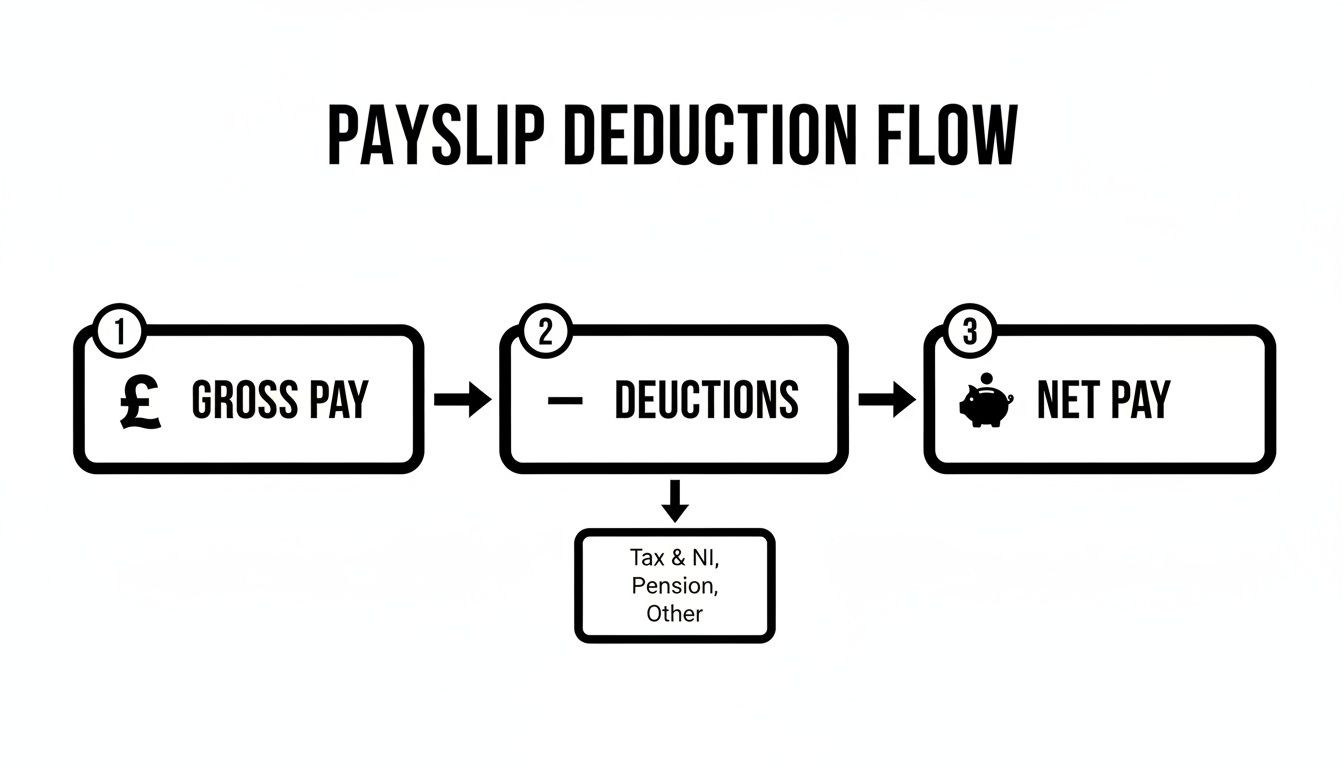
Essentially, you start with the total pot (Gross Pay), subtract all the necessary deductions, and what’s left is your Net Pay. Every payslip in the country follows this fundamental principle.
Step 1: Start With Your Gross Pay
The calculation always begins with your gross pay. This is the full amount you've earned before a single penny has been deducted. If you're on a fixed annual salary, just divide that figure by your pay frequency (for example, by 12 if you're paid monthly) to find your gross pay for that period.
Step 2: Find Your Taxable Income
Next, you need to figure out your taxable income. The good news is you do not pay tax on everything you earn. The first step is to subtract your Personal Allowance, which for the 2026/2027 tax year is £12,570.
Taxable Income = Gross Pay – Personal Allowance
So, if you earn £50,000 a year, your taxable income is £50,000 – £12,570 = £37,430. This is the figure HMRC will apply Income Tax to.
Step 3: Calculate Income Tax
With your taxable income sorted, you can work out the Income Tax. We will use the tax bands for England, Wales, and Northern Ireland for 2026/2027. You apply the different tax rates to the portions of your income that fall into each band.
- The first £37,700 of your taxable income is taxed at the basic rate of 20%.
- Any income above this (up to £125,140) is taxed at the higher rate of 40%.
For a £50,000 salary, your entire taxable income of £37,430 falls within the basic rate band. The calculation is straightforward: 20% of £37,430 = £7,486 in Income Tax for the year.
Step 4: Calculate National Insurance
National Insurance Contributions (NICs) are a separate calculation. For the 2026/2027 tax year, as an employee, you will be paying Class 1 NICs.
You pay 8% on earnings between £12,570 and £50,270. On a £50,000 salary, your NICs are only calculated on the portion of your earnings that sits between these two thresholds:
- £50,000 – £12,570 = £37,430
- 8% of £37,430 = £2,994.40 per year.
Understanding where every pound goes is more important than ever. The latest ONS figures for February 2026 show that while average earnings grew by 4.2%, real earnings growth was just 0.5% after inflation. This means an accurate take-home pay calculation is essential for real-world budgeting. You can read the full report on the ONS website about average weekly earnings in Great Britain.
Step 5: Subtract Other Deductions
Finally, you subtract any other deductions that apply to you. This is where your personal circumstances come into play. Common deductions include:
- Pension Contributions: The amount you've agreed to put into your workplace pension.
- Student Loan Repayments: If you have a student loan, this is calculated as a percentage of your earnings above a set threshold.
- Umbrella Company Margin: If you’re working through an umbrella, their fee is also deducted from your gross income.
Once you’ve taken off Income Tax, National Insurance, and these other items from your gross pay, the figure you're left with is your UK take home pay. If you would rather not do the maths yourself, our simple take-home pay calculator can run the numbers for you in seconds.
Contractor Pay Examples for a £50k Income
Theory is one thing, but seeing the numbers in action is where it all really clicks. We will now walk through a few practical examples for a contractor on a £50,000 income to show you just how much your working structure can affect your final net pay.
By putting a permanent employee side-by-side with a contractor using a compliant umbrella company, you can see exactly how deductions like the umbrella margin and employer's National Insurance come into play. It is the clearest way to understand the financial reality of each option.

Example 1: Permanent Employee on a £50,000 Salary
First, let's set our benchmark with a standard permanent employee. Their employer handles all PAYE (Pay As You Earn) tax and National Insurance deductions directly, and also pays the separate employer's National Insurance contributions on top of the salary. This is a key point, those costs do not come out of the employee's £50k.
Based on the 2026/2027 tax and NI rates for England:
- Gross Annual Salary: £50,000
- Personal Allowance: £12,570
- Taxable Income: £37,430 (£50,000 – £12,570)
- Income Tax: £7,486 (20% of £37,430)
- Employee's National Insurance: £2,994.40 (8% on earnings between £12,570 and £50,270)
- Total Deductions: £10,480.40
- Annual Take Home Pay: £39,519.60
This figure is our baseline. Now, let’s see how a contractor’s earnings compare.
Example 2: Contractor via an Umbrella Company on a £50,000 Contract Value
This is where things get different for a contractor. When an end client agrees to pay £50,000 for your services, this figure is the assignment rate, or contract value. Crucially, this is not the same as a salary, because it has to cover all the employment costs as well.
A compliant umbrella company acts as your employer. They take the £50,000 from the client and then process your payroll. This means they must deduct not only your personal Income Tax and NI but also the costs of employment that a permanent employee’s company would cover separately.
These employment costs include:
- Employer's National Insurance: The company's required contribution.
- Apprenticeship Levy: A tax on large employers that funds training.
- The Umbrella Company's Margin: Their fee for handling your payroll and employment.
These are all deducted from the assignment rate before your own gross pay is worked out. We will assume a typical umbrella margin of £25 per week (£1,300 per year) for this example.
Here's how that breaks down:
- Contract Value: £50,000
- Less Employment Costs:
- Employer’s NI (13.8% on earnings above £9,100): Approx. £5,646
- Apprenticeship Levy (0.5%): Approx. £208
- Umbrella Margin: £1,300
- Total Employment Costs: Approx. £7,154
- Your Gross Pay (for tax purposes): £42,846 (£50,000 – £7,154)
Only now do we calculate your personal deductions on this new, lower gross pay figure.
- Taxable Income: £30,276 (£42,846 – £12,570)
- Income Tax: £6,055.20 (20% of £30,276)
- Employee's NI: £2,422.08 (8% on earnings between £12,570 and £42,846)
- Total Personal Deductions: £8,477.28
- Annual Take Home Pay: £34,368.72
As you can see, the final UK take-home pay is quite a bit lower for the umbrella contractor in a direct comparison. This happens because the initial contract value has to stretch further to cover all the employment costs, a vital detail to remember when you're negotiating your day rate.
To make this even clearer, here’s a table summarising the key differences.
Take Home Pay Comparison for a £50,000 Income (2026/27)
| Deduction/Item | Permanent Employee (PAYE) | Umbrella Company Contractor |
|---|---|---|
| Starting Figure | £50,000 (Salary) | £50,000 (Assignment Rate) |
| Employment Costs | Paid by employer | – £7,154 |
| Gross Pay for Tax | £50,000 | £42,846 |
| Income Tax | – £7,486 | – £6,055.20 |
| Employee's National Insurance | – £2,994.40 | – £2,422.08 |
| Total Deductions from You | – £10,480.40 | – £15,631.28 (Total) |
| Final Take-Home Pay | £39,519.60 | £34,368.72 |
This table really highlights the impact of employment costs being deducted from the contractor's assignment rate.
Understanding the Difference
So, why the £5,150 difference in take-home pay? The main reason is simple: the £50,000 contract value for the contractor has to cover employment costs. For a permanent employee, their £50,000 salary has these costs paid on top by their employer. To get the same take-home pay as the permanent employee, the contractor would need to secure a higher assignment rate to absorb those extra deductions.
This is exactly why it’s so important for contractors to understand the full deduction structure. A compliant umbrella company, like those we partner with at UmbrellaCompany.com, will always provide a complete pay illustration so there are no nasty surprises. Transparency is everything.
It's also worth remembering that where you work matters. Data for 2026 shows big differences in UK salaries, with a full-time median in London at £39,778 compared to just £29,584 in the North East. When you're sizing up a contract rate, factoring in these regional pay landscapes is a smart part of financial planning. You can discover more insights about average UK salaries on sage.com.
Legitimate Ways to Maximise Your Net Pay
Boosting your net pay is not about finding dodgy loopholes that could get you into hot water with HMRC. It’s about being smart with your finances and making sure you’re not paying a penny more in tax than you absolutely have to.
It all comes down to understanding your contract and the deductions that apply. By making a few informed decisions, you can see a real difference in what lands in your bank account each year.
Optimise Your Pension Contributions
One of the most powerful tools at your disposal is your pension. When you contribute to a pension, you get tax relief on those contributions, which immediately lowers your overall tax bill.
For contractors using an umbrella company, this is often handled through a process called salary sacrifice. In simple terms, you agree to a slightly lower gross salary, and your employer (the umbrella company) pays that difference straight into your pension fund.
This has a few key advantages:
- Reduced Income Tax: A lower salary means you pay less income tax.
- Reduced National Insurance: Both you and your employer pay less in NI contributions.
- A Bigger Pension Pot: Many compliant umbrellas will also add their employer's NI savings to your pension, giving your retirement savings an extra boost.
Claim All Allowable Business Expenses
As a contractor, you can often claim tax relief on certain business-related costs. The rules are more generous if you're operating outside IR35, but even umbrella contractors can sometimes claim for things like travel to a temporary workplace or professional subscriptions.
To legally lower your taxable income and increase your net pay, it's vital to know how to properly categorize business expenses. You must keep good records and only claim for costs that HMRC deems legitimate. Doing this correctly reduces your taxable income, leaving more of your earnings with you.
It's absolutely crucial to only claim for expenses that are genuine and incurred 'wholly and exclusively' for your work. Any good umbrella company will guide you on what’s permissible, keeping you compliant and on the right side of HMRC.
Regularly Review Your Finances
Getting into the habit of checking your finances is a simple but effective way to protect your earnings. Small mistakes or oversights can easily add up, so it pays to be proactive.
Here are a few things to keep an eye on:
- Check Your Tax Code: Make sure you’re on the correct tax code. If it’s wrong, you could be overpaying tax all year. You can claim it back, of course, but it’s far better to get it right from the start.
- Review Your Contract Rate: With the cost of living always on the move, you need to ensure your rate is keeping up. Check it against the market every so often to make sure your earning power isn't slowly eroding.
- Choose a Compliant Umbrella Company: The margin an umbrella company charges is a direct cost that comes out of your contract value. A low margin is tempting, but compliance and good service are far more important. Our platform helps you find a provider who offers a fair margin without cutting corners.
For a more detailed look at this topic, you can learn more about how to maximise your take-home pay as a contractor in our dedicated guide. Taking these practical steps will put you in firm control of your earnings and improve your financial standing.
Your Contractor Pay Questions Answered
If you’ve ever looked at your payslip and wondered where all the money went, you’re not alone. The world of contractor pay can feel like a minefield of deductions and different payment structures.
We get asked about this stuff all the time. To clear things up, here are some straight answers to the most common questions we hear from contractors about their take-home pay.
Why Is My Take-Home Pay Different From a Colleague's on the Same Rate?
This is a classic. You and a colleague are both on £500 a day, but your net pay is noticeably different. How? It almost always boils down to your personal tax situation.
Here’s what’s likely causing the difference:
- Your Tax Code: This is the biggest culprit. A different tax code means HMRC has instructed your payroll provider to tax you differently. An emergency tax code, for instance, will take a much bigger slice until it's corrected.
- Student Loan Repayments: If you’re paying off a student loan and your colleague isn’t, your take-home pay will be lower. The type of loan you have (Plan 1, 2, or 4) also affects how much is deducted each month.
- Pension Contributions: Your pension choices have a direct impact. You might be contributing the minimum, while your colleague is making larger voluntary contributions to build their retirement pot. Their bigger contribution lowers their immediate take-home pay.
- Previous Earnings This Tax Year: Your pay is calculated against your earnings for the whole tax year. If you had a few months off before starting your current contract, your total annual earnings might be lower, putting you in a different tax position than someone who’s worked continuously.
How Does an Umbrella Company Affect My Take-Home Pay?
A good, compliant umbrella company acts as your employer, making sure all the right tax and National Insurance contributions are paid to HMRC on your behalf. It’s their job to keep you on the right side of the law.
But their role does change the pay calculation. The rate you agree with your client, your 'assignment rate', is not what your personal tax is based on. That rate has to cover all the costs of employment, including Employer’s National Insurance, the Apprenticeship Levy, and the umbrella’s margin. These are deducted before your own gross pay is worked out.
Watch out for umbrella companies promising unusually high take-home pay. This is a massive red flag. All compliant umbrellas operate under the same PAYE tax rules. The only things that should differ are their weekly or monthly margin and the quality of their service. Anyone promising more is almost certainly a tax avoidance scheme that could land you in hot water with HMRC down the line.
What Are the Real Benefits of Using an Umbrella Company?
For contractors who work on a series of different projects, an umbrella company offers a simple and continuous way to get paid. It strips away a lot of the admin that comes with running your own limited company.
Here are the main upsides:
- A Single, Continuous Employment: Even if you work for five different clients in a year, you have one continuous employment record with the umbrella. This is a huge help when applying for a mortgage or loan, as it shows lenders a stable work history.
- Zero Admin Headaches: The umbrella handles everything. They invoice the client, chase payments, calculate your tax and NI, and process your pay. You just submit your timesheets and wait for the money to hit your bank.
- Statutory Employment Rights: As an employee of the umbrella, you get access to statutory benefits like holiday pay, sick pay, and a workplace pension. It’s a safety net you just don't get as a sole trader.
- Smooth Transitions Between Gigs: Moving to a new contract is seamless. You stay with the same umbrella, so there’s no need to go through the hassle of being set up on a new client’s payroll system every time.
At UmbrellaCompany.com, we specialise in helping contractors find the right FCSA and Professional Passport accredited umbrella provider for their needs. Our comparison tool makes it easy to find a compliant and reliable partner, ensuring your pay is managed professionally. Compare trusted umbrella companies today and get set up in minutes.


