


When you’re self-employed, one date looms larger than any other in the calendar: 31 January. This is the hard deadline for filing your Self Assessment tax return online and settling up with HMRC for the previous tax year.
Simple, right? But as anyone who’s ever stared at a pile of receipts knows, there’s a bit more to it than just circling a date. This guide will walk you through the key dates, penalties, and preparation steps, making sure you feel confident and in control.
Getting to Grips with the Self-Employed Tax Return Deadline

The self-employed tax return deadline often feels like a massive source of stress for freelancers and business owners across the UK. We completely get it. This guide is here to cut through the jargon and give you a clear, straightforward path to filing on time, without that last-minute panic.
At UmbrellaCompany.com, our goal is to help you feel confident and in control of your taxes. We will walk you through the entire Self Assessment calendar, explain what happens if you miss a deadline, and share practical steps to get your return done efficiently.
Why This Date Matters So Much
Hitting that 31 January deadline isn’t just about dodging penalties, though that is a good reason. It’s a crucial part of keeping your business financially healthy. Staying organised shows HMRC you’re on top of your affairs, which is vital for your business's reputation and, just as importantly, your own peace of mind.
Take the 2022 to 2023 tax year, for example. The deadline was 31 January 2024, and a record-breaking 11.5 million taxpayers filed on time. That is an all-time high, showing that more self-employed people are getting the message. You can read more about these tax filing statistics on GOV.UK.
Key Self Assessment Deadlines at a Glance
To make things clearer, here’s a quick summary of the most important dates you need to remember. Think of this as your cheat sheet for the tax year.
| Task | Deadline | Method |
|---|---|---|
| Register for Self Assessment | 5 October | Online/Post |
| Submit paper tax return | Midnight, 31 October | Post |
| Submit online tax return | Midnight, 31 January | Online |
| Pay the tax you owe | Midnight, 31 January | Online/Bank |
| Make first 'payment on account' | Midnight, 31 January | Online/Bank |
| Make second 'payment on account' | Midnight, 31 July | Online/Bank |
Keeping these dates handy will help you plan ahead and avoid any nasty surprises when January rolls around.
What You'll Learn in This Guide
We have broken down everything you need to know to stay on top of your responsibilities. Consider this your go-to resource for a stress-free tax season.
- Key Calendar Dates: We will cover the complete timeline of all important Self Assessment dates, not just the final one.
- Penalty Structures: A crystal-clear explanation of what happens if you file or pay late. No sugar-coating, just the facts.
- Preparation Tips: Actionable advice on how to get your documents in order and calculate what you owe.
- Common Mistakes: A look at the frequent slip-ups people make and how you can easily sidestep them.
By understanding these key points, you can turn what feels like a daunting annual task into just another manageable part of your business routine.
Your Complete Self Assessment Timeline
To get a real grip on your taxes, you need to stop thinking about a single, terrifying deadline. Instead, look at the whole year. When you see your Self Assessment as a year-round process rather than a last-minute scramble, the pressure just melts away. This timeline is your playbook for staying organised and well ahead of HMRC.
First things first, the tax year itself runs from 6 April to 5 April. This is the 12-month window you will be reporting your earnings and expenses for. So, the 2024–25 tax year started on 6 April 2024 and will wrap up on 5 April 2025.
Key Dates for Your Calendar
Getting these dates into your calendar is the simplest, most effective thing you can do to make tax season a breeze. Each one marks a specific milestone in the Self Assessment cycle.
- 5 October: If this is your first time filing a Self Assessment, or you’re coming back to it after a break, you must register with HMRC by this date. Missing it can cause delays down the line.
- 31 October: Fancy doing things the old-fashioned way? If you prefer filing by post, your paper tax return has to be on HMRC's desk by midnight. This earlier deadline catches many people out.
- 31 January: This is the big one. Your online tax return must be filed, and your tax bill must be paid, by midnight. It is the most critical self-employed tax return deadline in the entire calendar.
To make it even clearer, here’s a visual breakdown of the key moments you need to know.
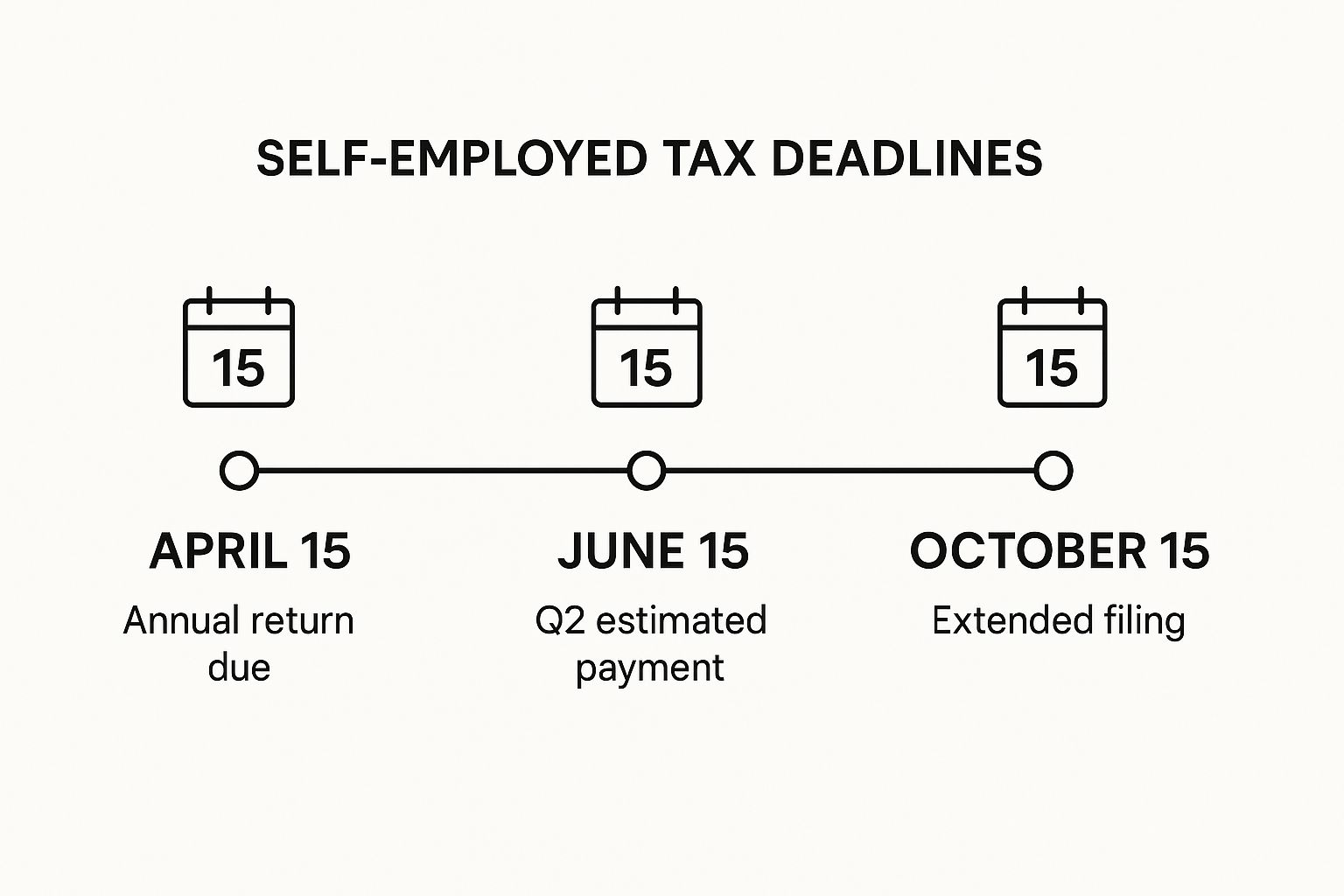
This simple guide puts the whole tax year into perspective, showing how each deadline leads up to that final submission and payment date in January.
Understanding Payments on Account
On top of the main deadlines, you might also have to deal with 'Payments on Account'. Do not let the name intimidate you. They’re just advance payments towards your next tax bill, but only if your last bill was over £1,000 and less than 80% of it was paid at source (through PAYE).
Payments on Account are essentially HMRC's way of helping you spread the cost of your next tax bill. Instead of one large payment, you make two smaller ones based on your previous year's earnings.
The deadlines for these are fixed:
- 31 January: Your first payment is due at the same time as you settle your main tax bill.
- 31 July: The second instalment is due right in the middle of the year.
Each payment is normally 50% of your previous year's tax bill. Getting these dates in your diary is absolutely vital for managing your cash flow. Smart financial planning makes all the difference, and you can learn more about how to structure your contractor income in our detailed guide.
What Is the Real Cost of Missing the Deadline?
So, what actually happens if your tax return is late? It is a question that keeps plenty of self-employed people up at night. But understanding the consequences isn’t about scaremongering; it’s about appreciating just how important that self-employed tax return deadline is for your financial wellbeing.
The moment the clock ticks past midnight on 31 January, HMRC’s penalty system automatically kicks in. It starts with an immediate £100 fine. This applies even if you’re just one day late and, crucially, even if you do not actually owe any tax. It is a straight-up penalty just for missing the cut-off.
But that initial fine is just the beginning. From there, the costs really start to climb.
How Late Filing Penalties Escalate
If you let things slide, the penalties get progressively worse. After three months, HMRC adds a daily penalty of £10 a day, which can run for up to 90 days. That is a potential extra £900 on top of the first £100.
Things get even more serious at the next key milestones:
- Six Months Late: Still have not filed? You will be hit with another penalty. This is either £300 or 5% of the tax you owe, whichever is higher.
- Twelve Months Late: At the one-year mark, you’ll face another penalty of either £300 or 5% of the tax due. For really serious cases, HMRC has the power to charge you up to 100% of the tax you owed in the first place.
Because these fines stack up, a year-long delay could land you with penalties of at least £1,600. And that is before we even talk about interest.
The Double Whammy: Interest and Late Payment Fines
On top of the penalties for filing late, there are also charges for paying late. Interest starts building up on any unpaid tax from 1 February, the day after the payment deadline.
HMRC is just as strict with late payment penalties. A 5% charge is added to any unpaid tax balance from 2 March.
It is a layered system designed to get you to file and pay on time. Thankfully, if you’re genuinely struggling, HMRC offers solutions like monthly payment plans to help you get back on track. You can find out more about how HMRC enforces penalties on ICAEW.com.
The takeaway here is simple: the costs of missing the deadline are steep and they add up fast. What starts as a small oversight can quickly snowball into a serious financial headache. Filing on time protects your hard-earned income.
How to Prepare for a Smooth Tax Submission
Let's be honest, filing your tax return probably is not the highlight of your year. But it does not have to be a last-minute scramble fuelled by cold coffee and panic. A little bit of organisation transforms what many people dread into a straightforward, almost painless, process.
Think of this as your game plan for a stress-free submission. We will walk through getting your documents in order, crunching the numbers, and making sure you claim every penny you're entitled to. The goal is to hit that self-employed tax return deadline feeling calm and confident.
Gather Your Essential Documents
First things first: get all your paperwork together in one place. This one step will save you a world of pain later on. It is like gathering all your ingredients before you start cooking; it just makes everything flow better.
You will need a complete picture of your financial incomings and outgoings for the tax year. This means digging out:
- Invoices and Sales Records: A full tally of all the income you've brought in.
- Bank Statements: Both your business and personal statements are crucial for tracing the money trail.
- Receipts for Expenses: Hold onto every single receipt for business purchases. From software subscriptions to train tickets, it all adds up.
- P60s or Payslips: If you also had a job on the side during the year, you'll need these to declare that income too.
Staying organised is about looking after your financial health. A clean record of your expenses is your best defence against overpaying tax by forgetting to claim for legitimate business costs.
Organise and Calculate Your Figures
With all your documents rounded up, it is time to bring some order to the chaos. You could use a simple spreadsheet or dive into dedicated accounting software. Many self-employed professionals find that good software automates a huge chunk of the work. If you want to explore that route, our guide to accounting for contractors is a great place to start.
Your next task is to calculate two vital numbers: your total income and your total allowable expenses. Subtracting your expenses from your income gives you your profit, which is the figure HMRC uses to work out your tax bill.
If you struggle to stay on top of things, do not be afraid to get some outside help. For some people, having a financial accountability partner provides just the right amount of structure and motivation to keep their finances in check and meet deadlines without fail.
This kind of disciplined approach ensures accuracy and helps you spot every single allowable business expense, which can directly lower the amount of tax you owe.
Your Self Assessment Preparation Checklist
To help you get started, here's a checklist of the key information you will need to pull together.
| Document/Information Type | Why You Need It | Example |
|---|---|---|
| UTR Number | Your unique 10-digit tax reference. You can't file without it. | Find it on previous tax returns or letters from HMRC. |
| Proof of Income | All sources of income, not just self-employment. | Invoices, P60s (from employment), bank interest statements. |
| Records of Expenses | To deduct allowable costs and reduce your taxable profit. | Receipts for office supplies, software, travel, phone bills. |
| Pension Contributions | To claim tax relief on payments into a personal pension. | Annual statement from your pension provider. |
| Gift Aid Donations | If you're a higher-rate taxpayer, you can claim back extra tax relief. | Records of donations made to registered charities. |
| Rental Income Details | If you rent out property, you'll need income and related expenses. | Tenancy agreements, letting agent fees, repair receipts. |
Having these items ready before you even log in to the HMRC portal is the secret to a smooth filing experience. It takes the guesswork out of the process and ensures you're not scrambling for a missing piece of paper at the eleventh hour.
Common Pitfalls That Can Derail Your Tax Return
Even the most organised self-employed professional can stumble into a few common traps when it is time to file. Think of this section as your guide to sidestepping those errors, making sure a simple, preventable mistake does not undo all your hard work. Knowing what to watch out for is half the battle.
It is often the small things that trip people up. A mistyped Unique Taxpayer Reference (UTR) number or a minor calculation error can be enough to get your return flagged for a manual review. It is so important to double-check these details before you hit that submit button.
Forgetting to Claim All Your Expenses
One of the biggest mistakes we see, year after year, is people not claiming every single legitimate business expense they are entitled to. This is not just about the big-ticket items; it is the mileage, the software subscriptions, and even a portion of your home utility bills if you work from home. Each one adds up and can significantly lower your final tax bill.
Meticulous record-keeping is your best defence here. Forgetting to claim an expense is basically leaving your hard-earned cash on the table for HMRC. To make sure you're claiming everything you can, have a look at our guide on the best ways to reduce tax as a contractor in the UK.
The Danger of Last-Minute Filing
Leaving your tax return until the final hours before the self-employed tax return deadline is a seriously high-risk game. What if you suddenly realise you're missing a bank statement? Or what if the HMRC website grinds to a halt under the weight of everyone else doing the same thing? It is a recipe for turning a manageable task into a frantic, stressful nightmare.
Plenty of people roll the dice. Online submissions now make up a huge 93.5% of all filings, and HMRC data shows that the peak time for people to finally submit is between 4 pm and 5 pm on deadline day itself. This mad dash massively increases the risk of mistakes and missed deadlines, which means automatic penalties.
A rushed tax return is often an inaccurate one. Give yourself plenty of time to review your figures, check for errors, and gather any missing information without the pressure of a looming deadline.
Getting this right is not complicated. Just follow a few simple steps:
- Start Early: Begin pulling your documents together months in advance, not days.
- Create a Checklist: Keep a running list to track every income source and potential expense.
- Review Everything: Before you submit, take a break, then come back and give all your entries one final, clear-headed review.
By sidestepping these common mistakes, you can tackle your tax return with confidence, knowing it's accurate, complete, and filed well ahead of schedule.
What to Do If You Cannot Pay Your Tax Bill
That sinking feeling when you realise you cannot afford your tax bill is one of the worst parts of being self-employed. But burying your head in the sand is the absolute worst thing you can do. Believe it or not, HMRC can be surprisingly understanding, but only if you are upfront and talk to them before the payment deadline sails by.
Ignoring the problem will not make it disappear; it just invites a world of escalating penalties and interest charges. Taking action shows you are responsible and opens the door to finding a solution. The golden rule is to act fast and be honest about your situation.
Understanding HMRC's 'Time to Pay' Arrangement
If you are struggling to pay on time, HMRC's go-to solution is a 'Time to Pay' arrangement. Think of it as a formal payment plan that lets you pay your tax bill in manageable monthly chunks, usually over 12 months or less. It is designed to give people with a temporary cash-flow headache some breathing room.
To set one up online, you generally need to meet certain criteria:
- You must owe £30,000 or less.
- You cannot have any other tax debts or overdue tax returns.
- You have to apply within 60 days of the payment deadline.
A Time to Pay arrangement is not a get-out-of-jail-free card for your tax bill. It is a structured plan to clear your debt. The good news is that agreeing to one stops the late payment penalties, though interest will still be added to whatever you owe.
How to Apply for a Payment Plan
The fastest route is to log into your Government Gateway account on the HMRC website. Their online system is straightforward and will walk you through the steps, asking questions about your finances to figure out a realistic payment schedule.
If your situation is more complicated or you owe more than £30,000, you will need to call the Self Assessment payment helpline. Be ready for a frank chat about your income and outgoings, and why you are unable to settle the bill in one go.
Getting your financial ducks in a row for that conversation can be a challenge. If you need a hand getting your business finances into better shape, you might find it helpful to learn more about the best accountants for limited company contractors who offer specialist advice. Whatever you do, the most important step is to make that call to HMRC before the deadline.
Got a Question About Tax Deadlines?
When you’re juggling self-employed tax deadlines, it is only natural for a few tricky questions to pop up. To give you that extra bit of confidence, we have tackled some of the most common queries we hear from self-employed professionals just like you.
What If I Spot a Mistake on a Return I’ve Already Sent?
It is a heart-in-mouth moment: you have just hit ‘submit’ and you realise you have made a mistake. First, do not panic. HMRC knows this happens and gives you a window to fix it.
You can amend your tax return online for up to 12 months after the official filing deadline. So, for the 2022–23 tax year, you have until 31 January 2025 to make any corrections.
It is a pretty straightforward fix:
- Log back into your HMRC online account.
- Find the tax return for the year you need to change.
- Choose the option to amend it.
- Simply correct the error and resubmit the form.
Correcting it quickly keeps your tax record straight and helps you sidestep any potential headaches down the line.
Do I Still Need to File a Return If I Barely Earned Anything?
This is a great question, and it all comes down to the trading allowance.
The government gives you a £1,000 tax-free allowance for income you make from self-employment or any other casual work. If your total gross income from your business for the whole tax year is less than £1,000, you are in the clear. You do not need to register for Self Assessment or file a tax return.
But the moment you earn over that threshold, you have to register and file a return, even if your actual profits are tiny after you've deducted your expenses.
Is There Any Way to Get an Extension on the Filing Deadline?
This is probably the most-asked question of them all. Unfortunately, the answer is usually no. HMRC is incredibly strict about the self-employed tax return deadline, and extensions are extremely rare. Being busy or just leaving it too late will not cut it.
An extension is generally only granted for truly exceptional circumstances that were completely out of your control. Think serious illness, a bereavement in your immediate family, or a major technical issue that physically stopped you from filing. You need what HMRC calls a 'reasonable excuse' and you will have to provide evidence to back it up.
If you think you might have a case, you need to contact HMRC as soon as you possibly can to appeal any penalty they issue.
Feeling a bit overwhelmed by your tax obligations? You do not have to figure it all out on your own. At UmbrellaCompany.com, we specialise in helping contractors and freelancers find trusted, compliant umbrella companies to make their finances simpler. By managing your payroll and taxes, an umbrella company can remove the stress of Self Assessment, so you don't have to worry about deadlines again.


