


You're working through an umbrella company, your payslips show tax coming off under PAYE, and then HMRC sends you something about Self Assessment. That catches plenty of contractors out.
The confusion usually comes from assuming PAYE and Self Assessment are alternatives. They aren't. PAYE deals with tax on income that's already going through payroll. Self Assessment deals with your wider tax position as an individual. If you've got side income, mixed contracts, a limited company, rental income, or other untaxed amounts, HMRC may still expect a return even though an umbrella has already deducted tax from your pay.
For contractors, this overlap matters most when your working pattern changes during the year. One contract sits inside IR35 through an umbrella. Another sits outside IR35 through your own setup. Or perhaps you moved from employment into freelancing halfway through the tax year. Those are exactly the situations where the phrase pay as you earn self assessment starts to matter in practice.
A calm way to approach it is this. Start with your total income picture, not just one payslip. Then work out which parts were taxed at source, which parts weren't, and whether anything creates a filing obligation.
Understanding PAYE and Self Assessment as a Contractor
What PAYE actually does
PAYE, short for Pay As You Earn, is the system an employer uses to deduct Income Tax and National Insurance before they pay you. If you work through an umbrella company, that umbrella is normally your employer for tax purposes, and it runs payroll for you.
That means the tax on those umbrella earnings is usually handled as you go. You receive payslips, your deductions are shown, and your year-end figures feed into forms such as your P60 or P45.
If you need a straightforward refresher on the payroll side, this guide to Pay As You Earn is a useful starting point.
What Self Assessment is for
Self Assessment is different. It's the system for reporting your full tax position when PAYE on its own doesn't tell HMRC everything they need to know.
A practical way to think about it is this:
- PAYE is your salary tax engine
- Self Assessment is your full-year tax review
That review can include employment income, self-employed income, property income, dividends, gains, and other amounts that weren't fully dealt with through payroll.
Practical rule: PAYE taxes a payment as it happens. Self Assessment checks whether your overall tax for the year is actually right.
Why Self Assessment matters beyond filing
Self Assessment isn't only an admin form. It also matters because it feeds into how the UK understands self-employment income at a national level.
The Office for National Statistics reported that across tax years ending 2016 to 2018, median self-employment income measured from Self Assessment data was consistently lower than survey-based measures, and the gap between mean and median was much larger in the administrative data, which shows how important Self Assessment data is for understanding earnings patterns and the skewed nature of self-employment income in Britain, according to the ONS comparison of survey and administrative self-employment income.
For contractors, that tells us something useful. HMRC doesn't see Self Assessment as a side issue. It's one of the main ways income outside payroll gets recorded properly.
Why contractors often have both
A contractor can easily sit in both systems in one tax year.
For example, you might:
- Work through an umbrella company for one assignment, with tax deducted under PAYE
- Invoice separately for outside IR35 work, which creates untaxed income to declare
- Receive rental income or another personal income stream alongside contract work
That's why the right question isn't, “Am I on PAYE?” It's, “Is all of my income fully dealt with by PAYE?”
If the answer is no, Self Assessment may still be part of your year-end workload.
When You Must File a Self Assessment Tax Return
Some contractors assume that once they're on payroll, the filing question disappears. Sometimes it does. Often it doesn't.
The key is to separate PAYE income that's already been taxed from income or tax issues that still need to be declared personally.
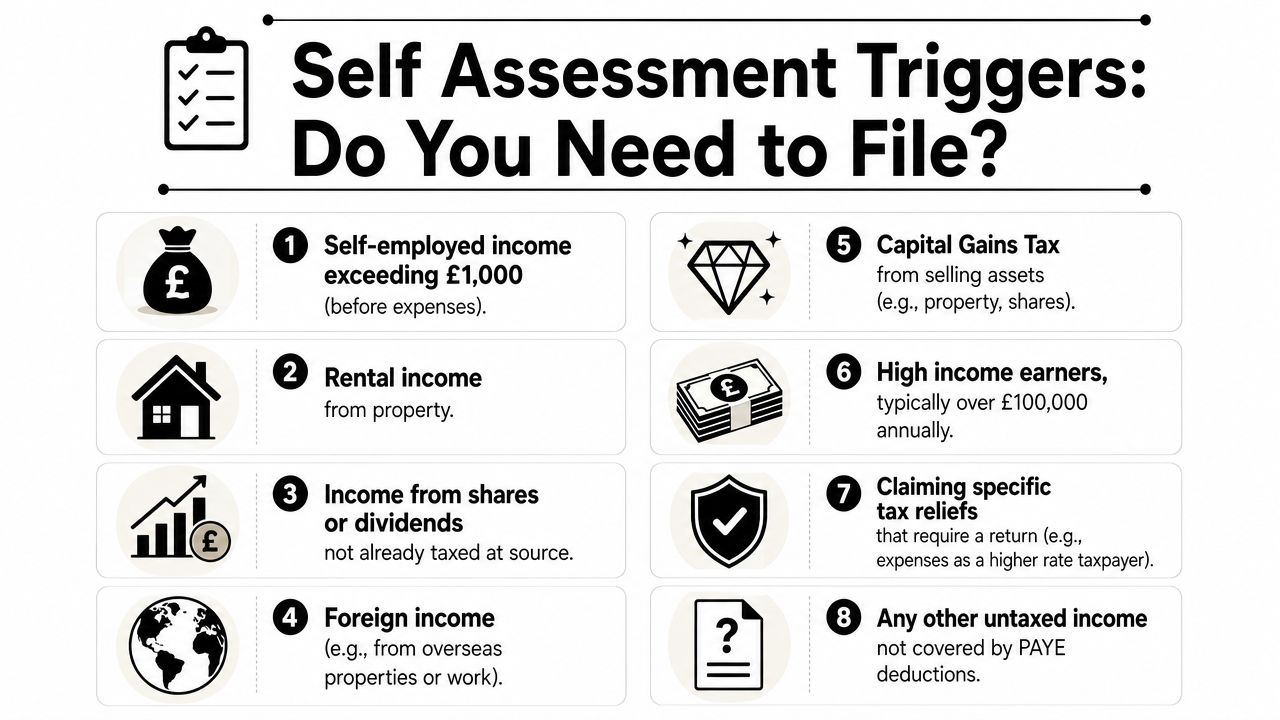
The main contractor trigger points
You'll usually need to look closely at Self Assessment if any of these apply:
- You have self-employed income. That can happen if you pick up freelance work outside your umbrella arrangement.
- You receive rental income. Property income often sits outside payroll, so it needs separate attention.
- You have income from shares, dividends, or overseas sources that hasn't already been fully dealt with through PAYE.
- You have capital gains to report after selling assets.
- You need to claim certain reliefs or expenses through a return.
- You have any other untaxed income that payroll hasn't touched.
- You operate through your own limited company. In practice, that usually means personal filing remains part of the job.
- Your income pattern changed during the year and the tax already deducted doesn't reflect the whole picture.
The high earner rule changed
One area that has changed recently is the position for employees whose income is taxed only through PAYE.
For the 2023/24 tax year, taxpayers whose only income was taxed through PAYE and who had previously filed solely because they earned between £100,000 and £150,000 no longer needed to automatically file a Self Assessment return if they met HMRC's other conditions, and for 2024/25 that requirement for PAYE-only taxpayers was removed completely, according to Brown Butler's explanation of the high earner Self Assessment change.
That same source also notes that the Personal Allowance is reduced by £1 for every £2 of income above £100,000, and is effectively removed once income exceeds £125,140. So even though the automatic filing trigger changed for PAYE-only earners, the tax consequences of crossing that income level still matter.
If you're a contractor with umbrella income only, this rule change may remove the automatic filing requirement. If you've got anything else in the mix, don't assume it applies to you.
Mixed contractor setups are where mistakes happen
This is the part standard guidance often glosses over.
A contractor may spend one part of the year inside IR35 through an umbrella and another part outside IR35 as a sole trader or through a company. In that case, umbrella payroll only covers one slice of the year. The rest still needs reviewing.
A simple sense-check is to ask yourself:
| Question | If yes |
|---|---|
| Did all of your income come through one payroll? | You may not need Self Assessment, depending on your wider position |
| Did you invoice anyone directly? | You likely need to review Self Assessment carefully |
| Did you receive income that never appeared on a payslip? | That's a common filing trigger |
If you're also trying to get ahead of digital record-keeping, these sole trader MTD requirements are worth reading because they help clarify what HMRC increasingly expects from people with self-employed income.
And if deadlines are what worry you most, keep a close eye on the key Self Assessment deadlines in the UK, because filing late and registering late are different problems.
How PAYE Income Affects Your Self Assessment Calculation
The biggest fear here is being taxed twice on the same money. That isn't how the system is meant to work.
When you complete a Self Assessment return, you don't ignore the PAYE income you've already had. You include it, along with the tax already deducted. HMRC then uses those figures in the overall calculation.
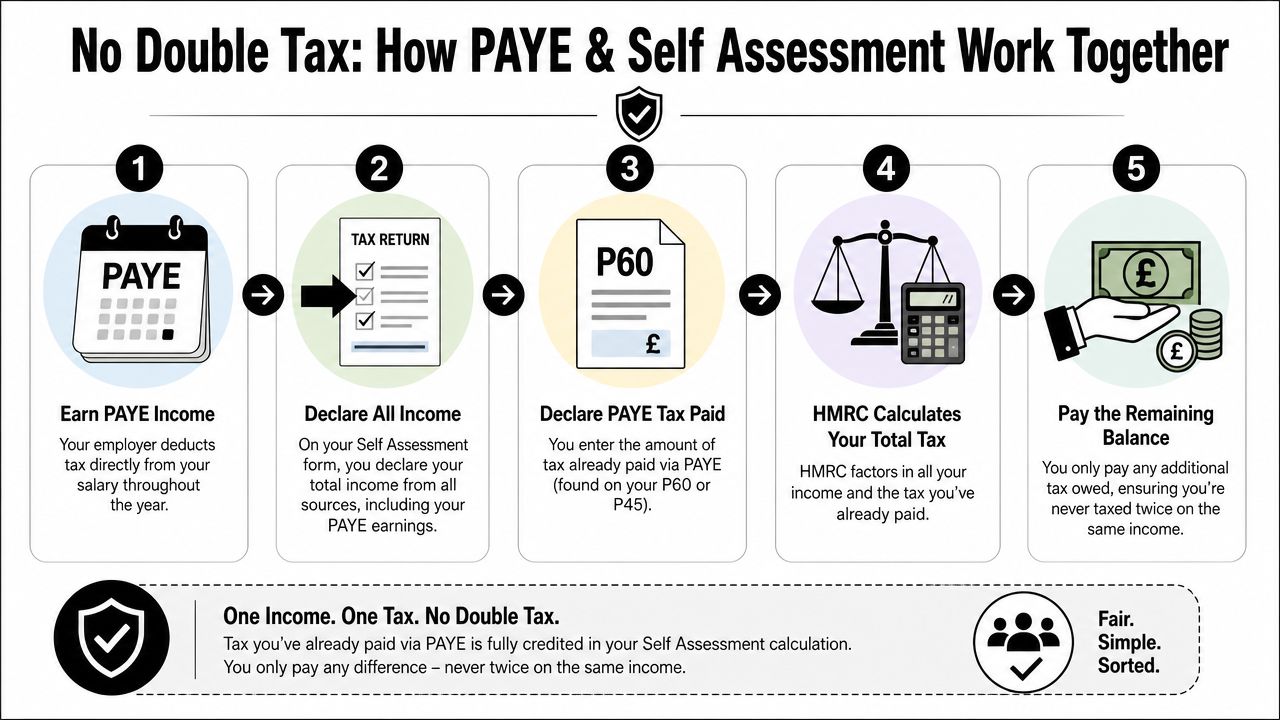
How the return handles PAYE income
Think of your return as a reconciliation.
You tell HMRC:
- What you earned from employment
- What tax was already taken through payroll
- What else you earned outside payroll
HMRC then works out your total liability for the year and gives credit for the tax that's already been paid via PAYE.
A practical example helps. If an umbrella company paid you through payroll for part of the year, that income still goes on the return if you need to file. You'd normally use your P60 or P45 figures so the income and tax deducted are recorded properly. The return then nets that off against any tax due on your other income.
PAYE tax already paid is not ignored. It's part of the calculation, and it reduces what you may still owe.
Why the bill can still be bigger than expected
People get caught out when PAYE covered one job correctly, but another income source sat outside payroll.
Common examples include:
- Freelance invoices on the side
- Property income
- A late-year change in working pattern
- Expenses or relief claims that alter the final position
The result isn't double taxation. It's usually that one part of your income was taxed as you went, while another part wasn't.
If you're reviewing what can and can't be claimed before filing, a broad ultimate guide to tax deductions can help you organise your thinking, although you should always apply UK tax rules to your own position.
When HMRC can collect a small balance through PAYE
In some cases, HMRC can collect a small Self Assessment liability through your PAYE tax code instead of asking for a separate payment straight away.
ACCA notes that HMRC's PAYE coding route can only be used where the liability is under £3,000, the taxpayer already has PAYE income, and the deduction cannot absorb more than 50% of PAYE income or more than double the normal tax bill, as explained in ACCA's article on paying a Self Assessment liability via your PAYE code.
That option can be useful, but it's limited. For many contractors, especially those with uneven earnings, it won't be available or suitable.
Umbrella Companies IR35 and Your Tax Obligations
For contractors, structure changes everything. The tax answer isn't just about what you earn. It's also about how you're engaged.
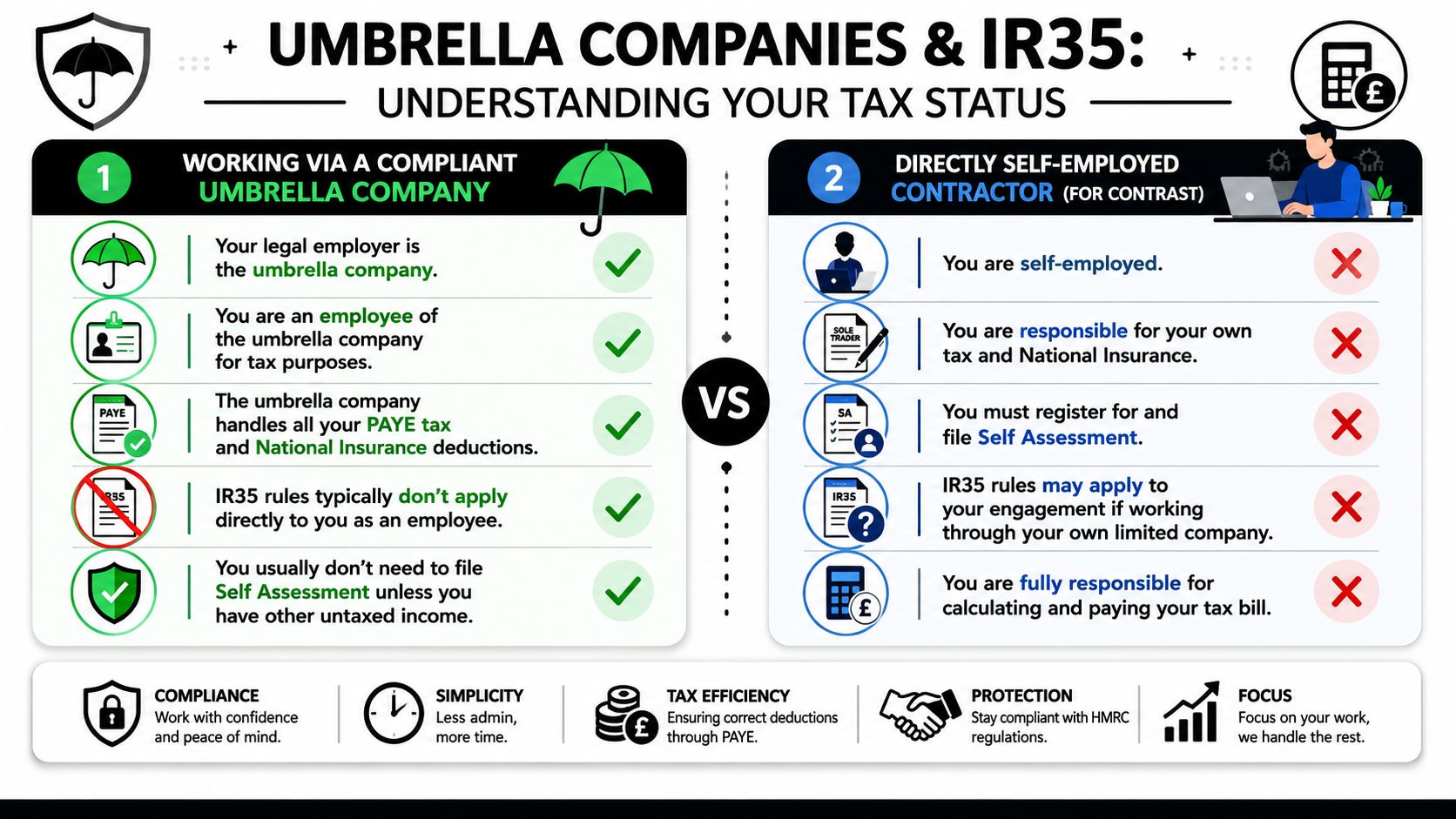
Working through a compliant umbrella company
If you work through a compliant umbrella company, the umbrella is generally your employer. It runs payroll, deducts PAYE tax and National Insurance, and issues your payslips.
For many contractors working inside IR35 through an umbrella, that simplifies things a lot. If all your income goes through that payroll and you don't have other untaxed income or another filing trigger, you may not need to file a return.
That's one reason umbrellas are often attractive for short-term or straightforward inside IR35 work. You're not personally calculating the payroll deductions each time you're paid.
Using your own limited company or working directly
The picture changes if you contract through your own limited company or work directly as self-employed.
Here's the practical contrast:
| Working setup | What it usually means for tax admin |
|---|---|
| Umbrella company | PAYE is handled through payroll, personal filing may be unnecessary if there are no other triggers |
| Own limited company | Personal and company compliance both need active management |
| Direct self-employment | You're responsible for keeping records, filing, and paying what's due |
That's why contractors moving between models in the same tax year need to be especially careful. A year that starts under an umbrella and ends with direct invoicing isn't a simple PAYE year anymore.
Where IR35 fits
IR35 often confuses people because it's discussed as if it replaces everything else. It doesn't.
If you're employed by an umbrella, IR35 generally doesn't apply to you in the same direct way it does when you supply services through your own limited company. The umbrella route moves you into employment taxation for that assignment.
If you want a cleaner overview of that distinction, this guide to umbrella companies and IR35 is useful background reading.
The contractor mistake is assuming one compliant umbrella assignment means the whole tax year is covered. HMRC looks at the whole year, not just one contract.
A Practical Guide to Registering and Filing
Once you know you need to file, the process becomes much easier if you handle it in order. Most problems come from missing one step early, then rushing the rest later.
To make the timeline easier to follow, keep this visual guide handy.
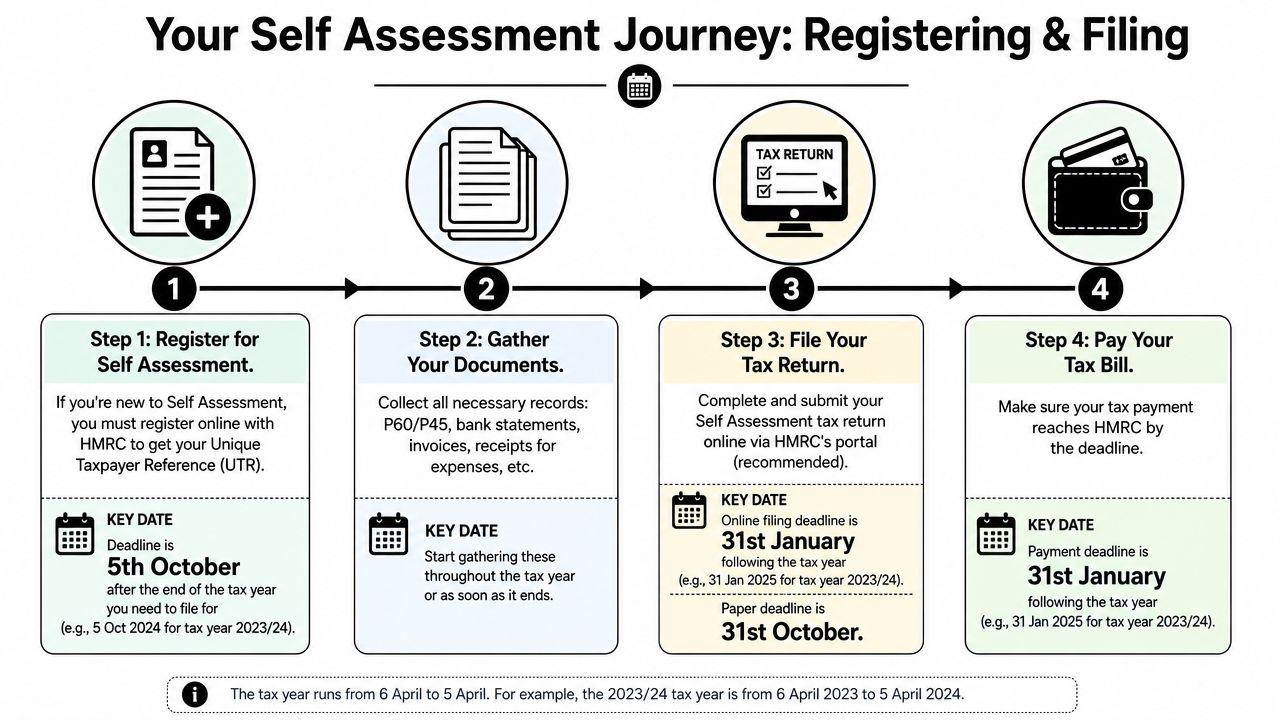
Step one, register in time
If you're new to Self Assessment, you need to register with HMRC so you can get your Unique Taxpayer Reference and access the filing system.
The key deadline is 5th October after the end of the tax year in which you first needed to file. Contractors often miss this because they focus only on the payment deadline later on.
If you're changing from umbrella-only work into direct self-employment, this guide on when to register as self-employed will help you sense-check the timing.
Step two, gather the right records
Before you even open the return, pull together the paperwork. For contractors, that usually includes:
- P60 or P45 figures from umbrella or employment income
- Invoices and payment records for work billed directly
- Bank statements to support income tracking
- Expense records and receipts where relevant
- Details of any other personal income outside payroll
If your work crosses borders or you need to verify trading details for overseas counterparties, practical resources on VIES and IRS lookups can be helpful for broader tax administration, especially where records need to be consistent.
Step three, complete the return carefully
This video gives a useful overview before you start entering figures.
When you complete the return, the important thing is to match each income source to the right section. Employment income goes in the employment pages. Self-employed income goes in the relevant business section. Other income needs its own treatment.
Don't guess from memory if you can avoid it. Use the documents in front of you.
Step four, pay what's due and deal with cash flow early
The online filing deadline is 31st January following the tax year, and the payment deadline is also 31st January. If you know the bill will be hard to clear in one go, act early rather than waiting for HMRC to chase you.
Taxpayers with a Self Assessment bill of less than £30,000 can apply online to set up a payment plan in weekly or monthly instalments, provided they are up to date with other tax payments, and late-paid tax continues to accrue interest at 2.6%, according to this explanation of the HMRC Self Assessment payment plan rules.
That's useful breathing space, but it isn't free breathing space. Interest continues, so it's still worth budgeting ahead if you can.
Common Self Assessment Pitfalls for Contractors
Contractors rarely get into trouble because the rules are impossible. More often, they trip over ordinary working habits.
One common example is the contractor who spends most of the year through an umbrella, then does a short direct project on the side and forgets about it at filing time. The umbrella income feels official because it arrives on payslips. The side income feels informal because it arrived by bank transfer. HMRC won't see that distinction the same way.
Another regular issue is timing. A contractor changes working pattern late in the tax year, earns irregular amounts for a few months, and then tries to rebuild the numbers from memory. That's where records matter. A common issue for contractors is handling irregular or seasonal income on their tax return, and while HMRC uses the most recent tax return for assessments, it can accept pay stubs or signed income documentation when filings aren't current, which makes good record-keeping for volatile income essential, as noted in this guide on PAYE income evidence and changing income documentation.
The mistakes we see most often
- Assuming the umbrella files everything. It handles payroll. It doesn't automatically deal with your whole personal tax position.
- Forgetting side income. Small freelance jobs are still income.
- Waiting until January to organise paperwork. That turns a manageable task into a scramble.
- Not planning for a balancing payment. If income outside PAYE has built up, the bill can feel abrupt.
- Using rough figures instead of documents. That creates avoidable errors.
Keep one running folder for every tax year. Payslips, P60s, invoices, bank summaries, and expense evidence should all go in there as the year progresses.
If your income is lumpy, that habit does more than help with filing. It also helps you explain your position clearly if HMRC, a lender, or anyone else asks for evidence later.
Conclusion Your Path to Tax Clarity
For contractors, Pay As You Earn Self Assessment isn't a contradiction. It's how the UK tax system works when your income comes from more than one place or your working setup changes during the year.
The practical rule is simple. PAYE deals with payroll income as it's paid. Self Assessment deals with your full personal tax picture. If all your earnings went through a compliant umbrella payroll and nothing else creates a filing trigger, your position may be straightforward. If you've mixed umbrella work with self-employment, a limited company, rental income, or other untaxed amounts, you need to review the year properly.
A quick annual check is worth doing even when you think everything is covered. It helps you catch issues early, avoid last-minute panic, and keep control of your cash flow.
If you're choosing how to work on your next contract, the provider you use can make day-to-day compliance much easier.
If you're comparing providers for your next assignment, Umbrella Company helps contractors and freelancers review trusted umbrella companies and find an option that fits their role, rate, and IR35 position.


