


You're at a client site, swapping a laptop, testing a dock, or helping with a networked printer that nobody else can get working. You shift a monitor arm, catch a cable, and suddenly an expensive bit of kit hits the floor. That's the moment many contractors realise they've been thinking about the wrong insurance.
Most IT professionals worry first about bad code, missed requirements, or a project that goes off track. Those are real risks, but they're not the whole picture. If your work brings you into contact with client premises, client equipment, or visitors to your own workspace, there's also the risk of a physical accident and a claim from a third party.
That's where IT contractors public liability insurance comes in. It's there for the non-technical mishaps that can still become very technical disputes once solicitors get involved.
Why IT Contractors Need to Understand Public Liability
Many IT contractors still assume public liability is mainly for tradespeople, engineers, or businesses with a shop front. In practice, it matters to contractors too, especially if your work involves site visits, installations, support calls, hardware handling, or face-to-face client meetings.
Public liability insurance sits in the background until something physical goes wrong. A client trips over your charging cable during a workshop. You damage a meeting room screen while fitting equipment. You knock over a borrowed device during testing. Those incidents don't look like “insurance problems” at first, but they can quickly turn into allegations of property damage or personal injury.
A major regional market review helps show how standard this kind of cover has become. Public liability was reported as a major line of business, accounting for 38% of all commercial insurance covers and included in 96% of business package policies in the reviewed market across the British Isles, according to the Central Bank's 2023 liability market review. That matters because it shows public liability is not niche cover. It's part of mainstream business protection.
Why contractors get caught out
The confusion usually comes from how IT work is described.
You sell expertise, not manual labour. So it's easy to assume your biggest exposure is only professional negligence. Sometimes that's true. But the moment your work has a physical setting, your risk profile changes.
Common triggers include:
- Client site attendance when you install, test, troubleshoot, or present
- Handling hardware such as laptops, monitors, servers, phones, or cabling
- Visitors to your premises if clients come to your office or workspace
- Ad hoc practical work that falls outside pure desk-based development
Public liability is often less about what your job title says and more about what you physically do during the contract.
If you're also weighing up IR35 and working arrangements, our guide to IR35 for IT contractors helps put the insurance question in the broader context of how your contract is structured.
What Public Liability Insurance Covers for IT Contractors
Public liability insurance covers claims from third parties who say your business activities caused injury or damage to their property. For IT contractors, that usually means real-world accidents rather than technical mistakes.
That distinction matters. If a client claims your software advice caused financial loss, that's a different insurance question. Public liability is about the physical event.

UK contractor guidance for IT professionals says public liability should be considered if you work on client sites or if clients visit your premises, because it covers third-party claims for property damage or personal injury caused by your business activities, and it also notes that there is generally no legal requirement to hold it unless you employ staff and therefore need employers' liability insurance, as explained in this UK IT contractor public liability guide.
What that looks like in real IT work
A few common scenarios make this easier to pin down:
Cable trip accident
You're setting up a temporary workstation in a client office. A staff member trips over your power lead and is injured.Damage during hardware support
You move client equipment to access a patch panel and crack a screen or drop a device.Accidental damage in a meeting room
While connecting demo equipment, you damage a wall-mounted display or conference system.Visitor injury at your workspace
A client visits your premises and slips, falls, or suffers an injury linked to the space you control.
What public liability does not cover
Many contractors often confuse insurance terms.
Public liability is not there for:
- Faulty coding
- Bad implementation advice
- Specification errors
- Professional negligence
- Pure financial loss without physical injury or property damage
If you want a broader plain-English resource on understanding liability coverage, that guide is useful for seeing how liability policies are generally framed before you compare the UK contractor-specific details.
Practical rule: If the problem starts with a person getting hurt or a thing getting damaged, public liability is the first policy to think about.
For a wider look at cover options around IT contractors public liability insurance and related protection, see our guide to contractor insurance in the UK.
Public Liability vs Other Key Contractor Insurances
The biggest insurance mistake IT contractors make is assuming one liability policy covers everything. It doesn't. You can write flawless code and still face a public liability claim. You can cause no physical damage at all and still face a professional indemnity claim.
That's why the split matters.
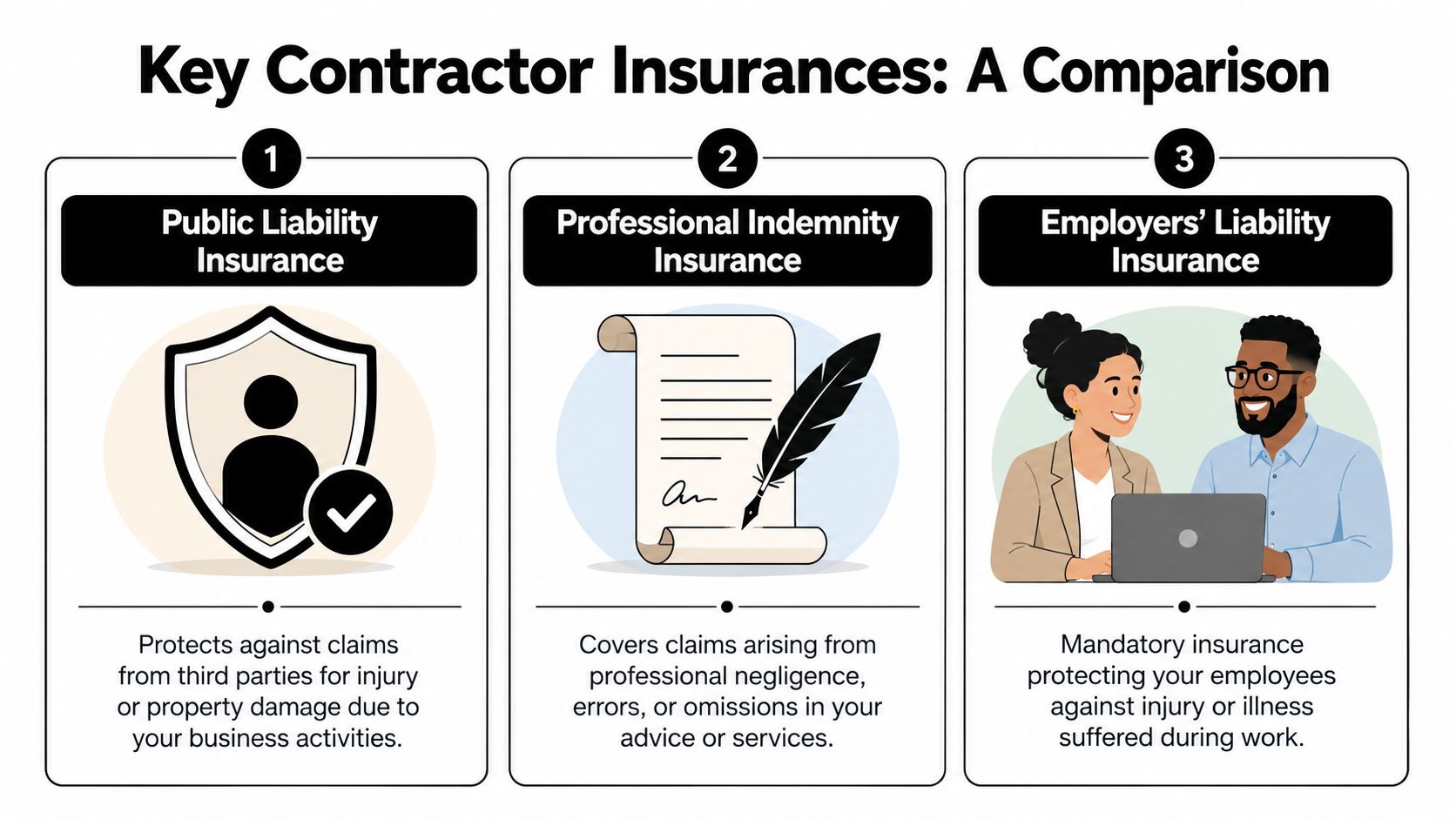
The simple difference
- Public Liability Insurance deals with physical injury or property damage involving third parties.
- Professional Indemnity Insurance deals with losses linked to your advice, service, negligence, errors, or omissions.
- Employers' Liability Insurance deals with injury or illness suffered by your employees in the course of their work.
A procurement example shows how seriously buyers treat this separation. A public-sector insurance schedule for IT professional services requires both commercial general liability and technology professional liability, with $1,000,000 per occurrence for general liability and $2,000,000 per occurrence for technology professional liability, as set out in these IT professional services insurance requirements. The figures are from a US procurement document, but the structure is useful because it shows how organisations separate physical risk from professional-services risk.
Here's a quick comparison.
| Insurance Type | What It Covers | Example IT Contractor Scenario |
|---|---|---|
| Public Liability | Third-party injury or property damage caused by your business activities | A client trips over your laptop cable during an on-site rollout |
| Professional Indemnity | Claims that your advice, deliverables, or services were negligent or flawed | A specification error in your implementation plan causes the client financial loss |
| Employers' Liability | Injury or illness suffered by someone you employ | Your employee is injured while carrying out work duties |
A short explainer can help if you want another perspective before speaking to a broker.
The trigger test
When a contractor asks, “Which policy responds?”, I usually suggest one first question.
What triggered the complaint?
If the answer is “someone was hurt” or “something was physically damaged”, start with public liability.
If the answer is “the client says my work, advice, or deliverable was wrong”, you're in professional indemnity territory.
If the answer is “my employee got injured while working”, that points to employers' liability.
Why this matters in contracts
Clients often ask for certificates without explaining why each one exists. If you don't understand the difference, it's easy to buy the wrong cover or assume one policy is doing the work of three.
For a clearer look at the negligence side of the picture, this professional liability insurance guide is a useful companion read.
If you want a contractor-focused overview of the professional side, our page on contractor indemnity insurance breaks down how indemnity cover fits alongside public liability.
Determining If You Need Public Liability Cover
A lot of contractors ask the same blunt question. “Do I need this, or is it just another policy somebody wants to sell me?”
The honest answer is that some contractors can operate without buying standalone public liability cover. But many shouldn't.
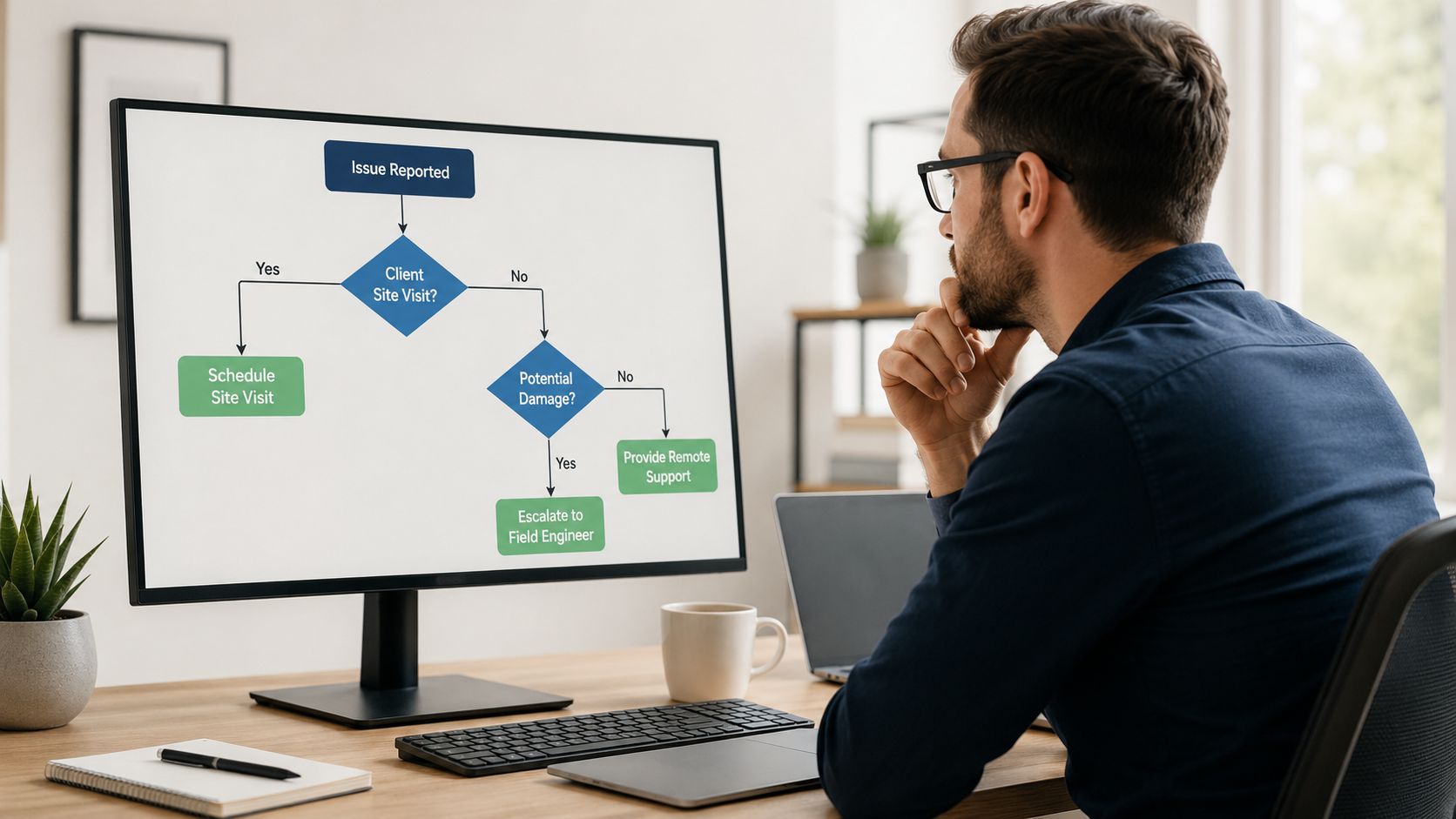
You probably need it if your work is physically present
If your contract involves any of the following, public liability usually belongs on your checklist:
- On-site support where you work in client offices, data rooms, or meeting spaces
- Installation or setup work involving devices, monitors, network equipment, or peripherals
- Client visits to your office or another workspace you control
- Hands-on troubleshooting where you move, test, connect, or disconnect equipment
A fully remote software contractor who never meets clients in person and never touches client hardware may have a lower public liability exposure. But lower exposure isn't the same as no exposure.
Contract requirements often settle the issue
In real life, the decision is often made for you by the client's procurement team.
Larger businesses, public bodies, and agencies commonly require proof of cover before you start. They're not accusing you of being careless. They're making sure their suppliers carry the right insurance if something physical goes wrong during the engagement.
Even when public liability isn't legally compulsory, it can still be commercially compulsory because the contract says so.
A useful self-check
Ask yourself these questions:
- Will I work at a client location at any point?
- Will I handle or move client property?
- Could a third party be injured because of my equipment or setup?
- Does the contract ask for public liability specifically?
- Am I comfortable taking that risk personally if a claim lands?
If you answered yes to any of those, public liability isn't just paperwork. It's part of basic risk management.
How Umbrella Companies Handle Contractor Insurance
For many contractors, the easiest route isn't arranging every policy yourself. It's working through an umbrella company that already includes the core insurances needed for common contract scenarios.
That matters because insurance admin can be awkward. You need to check policy wording, limits, renewal dates, certificates, and whether the cover matches what the client contract asks for. If you miss something, the problem tends to show up just before onboarding or just after an incident.
What's usually included
A compliant umbrella arrangement will often include a package addressing the main contractor liability areas, such as:
- Public liability for third-party injury or property damage claims
- Professional indemnity for service-related negligence claims
- Employers' liability where employment status makes that relevant
This doesn't mean every umbrella policy is identical. The level of cover, scope, and wording can differ. You still need to confirm that the cover is suitable for the assignment you're taking.
What this means in practice
If you contract through an umbrella, the insurance piece is often handled as part of the service rather than as a separate buying exercise.
That can help when:
- A client asks for proof quickly
- You need multiple liability policies at once
- You're moving between assignments
- You don't want to manage renewals and certificates alone
Umbrella Company lets contractors compare providers, including options where insurance is part of the umbrella service, which is useful if you want to review setups through the lens of compliance as well as cover. If accreditation matters to you, it's worth checking what FCSA umbrella companies look like and what standards they follow.
Don't assume “insured” automatically means “covered for your contract”. Always ask what policies are included and what the limits are.
If a contract has unusual requirements, such as specific endorsements or a higher limit than standard, you may still need extra cover or confirmation from the provider.
Choosing Your Public Liability Insurance Policy
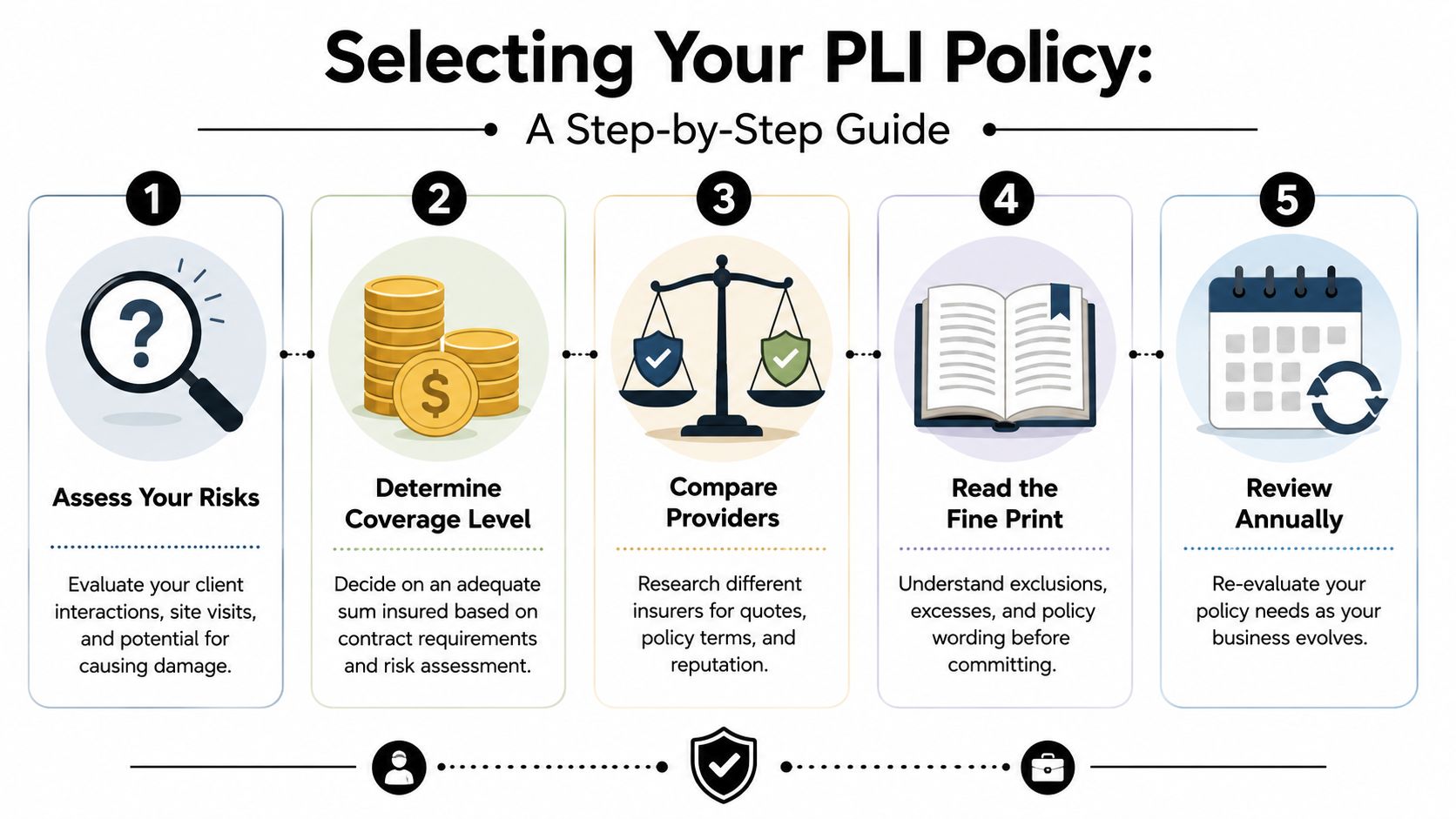
If you're buying your own policy, don't start with price. Start with the contract and the work you do.
That's because public liability cover for contractors is typically sized around client requirements rather than turnover. Guidance on contractor liability explains that the risk comes from the potential severity of one injury or property damage claim, along with legal costs and damages, rather than how much revenue your business makes, as noted in this explanation of how contractor public liability cover is usually sized.
Start with the contract wording
Before you compare insurers, read the insurance clause in your contract or supplier schedule.
Look for:
Required limit of indemnity
The client may state the minimum cover they expect.Specific policy type
Some contracts ask expressly for public liability, not just “business insurance”.Additional conditions
There may be wording around contractual liability, completed operations, or insured parties.
If the contract asks for something precise, a cheap generic policy may not be enough.
Use a practical buying checklist
When reviewing IT contractors public liability insurance, check these points carefully:
Where do you work most often
If you regularly attend client sites, your exposure is different from a contractor who only works remotely.What do you physically do
Coding at home is one thing. Installing devices, running workshops, or testing equipment on-site is another.What's the excess
The excess is the amount you pay towards a claim. A low premium can sometimes come with an excess that feels painful when a claim arises.What's excluded
Every policy has exclusions. Read them. Don't rely on assumptions.Does the wording match your services
A policy should reflect the actual nature of your work, not a vague business description that misses part of what you do.
Questions worth asking before you buy
A broker or insurer should be able to answer these clearly:
- Does this cover accidental damage to client equipment while I'm working on-site?
- Does it include legal defence costs for a third-party claim?
- Are there any exclusions that affect IT support, installation, or hardware handling?
- Will this satisfy typical client or agency requirements?
- What evidence of cover can I provide to a client?
The right policy isn't the one with the lowest premium. It's the one that still works when your client asks awkward questions before you start.
Don't forget the annual review
Contractors often buy a policy based on one engagement, then keep renewing it while their work changes.
That's risky. If you move from remote development into field support, device deployment, or hybrid consultancy, your exposure changes too. Review your policy each year and whenever your contracts start involving more physical activity.
Frequently Asked Questions for IT Contractors
Do I need public liability insurance if I work fully remotely
Maybe not in the same way as a contractor who is constantly on-site, but don't assume remote work removes the issue completely. If a client ever visits your workspace, or if your contract still requires public liability, the question comes back quickly.
If I damage client hardware, is that public liability or professional indemnity
If the loss comes from physical damage to the client's property, that usually points to public liability. If the argument is that your advice, design, coding, or implementation caused a non-physical loss, that usually points to professional indemnity.
Why is a client asking for both public liability and professional indemnity
Because they cover different risks. One deals with injury and property damage. The other deals with negligence in professional services. A client that understands supplier risk often wants both.
Is public liability legally required in the UK
Not for every contractor in every setup. The position can change if you employ staff, because employers' liability becomes the legal issue there. But even where public liability isn't legally compulsory, a client may still make it a contract condition.
I'm an umbrella contractor, so can I ignore insurance
No. You may not need to arrange every policy personally, but you still need to know what cover exists, what the limits are, and whether your current assignment fits within it.
What's the simplest way to think about the difference
Use this rule of thumb.
- Someone hurt or something damaged equals public liability
- Advice, service, code, or specification caused loss equals professional indemnity
- Your worker got injured equals employers' liability
If you're comparing working arrangements and want to understand how insurance fits into the wider contractor setup, Umbrella Company can help you review umbrella options, compliance considerations, and the practical cover questions to ask before you accept an assignment.


