


An IR35 take home calculator is your best friend for seeing the real-world financial difference between working inside and outside IR35. It is a vital tool for any UK contractor, giving you an instant forecast of your net earnings based on your day rate, expenses, and employment status.
How an IR35 Calculator Demystifies Your Earnings
The IR35 legislation can feel like a minefield, but understanding its direct impact on your pocket does not have to be. We have built our IR35 calculator to slice through that complexity, giving you a powerful way to visualise your potential take-home pay under different contract scenarios.
Think of it as a financial simulator. You plug in a few key details about your contract, and it produces a detailed breakdown of your earnings. This is not just a single number; it shows you exactly how deductions like tax and National Insurance are applied depending on your IR35 status.
Since the off-payroll working rule reforms landed in 2021, these calculators have become essential. For example, a contractor earning £80,000 a year on a £400 day rate could see their net income drop from around £65,000 to £52,000 if a role is deemed inside IR35. That's a drop of roughly 20%.
Making Informed Career Decisions
Perhaps the biggest benefit of using an IR35 take home calculator is the clarity it brings to your career decisions. Instead of guesswork, you can confidently assess whether a particular contract rate is actually worth it once all the necessary deductions are factored in.
You can use the results to:
- Compare contract offers with a proper understanding of the net pay for each.
- Negotiate your day rate more effectively, armed with hard data on your income needs.
- Plan your personal finances and budgets with a much more realistic income forecast.
- Understand the value of working with a compliant umbrella company if a role falls inside IR35.
Of course, the first step is knowing your status. HMRC provides tools to help you figure this out, which is the starting point for any calculation. Below is a snapshot of what you might see on the GOV.UK website.

This official tool helps clarify your status, which then allows you to use a calculator with the correct assumptions. For a deeper dive into the rules, our complete guide explains what IR35 is and how it affects your work.
By forecasting your earnings, you move from uncertainty to empowerment. An IR35 calculator translates complex tax rules into a simple, tangible figure: the money that actually lands in your bank account.
To get a handle on how different tools can shine a light on your financial future, you might want to explore other financial calculators as well. Ultimately, resources like these give you the insight needed to navigate your contracting career with total confidence.
Gathering Your Information for an Accurate Estimate
To get a reliable result from any IR35 take home calculator, the quality of the information you provide is everything. The calculator can only work with the numbers you provide, so gathering accurate details beforehand is the key to getting a meaningful financial forecast.
The first piece of the puzzle is your contract rate. This is the figure you have agreed for your services, usually set as a daily or hourly rate. If you are still figuring out what to charge, it is well worth using tools that can help you land on a competitive number. You can explore this further with a specialised contractor daily rate calculator.
Calculating Your Working Days and Allowable Expenses
Next, you need a realistic idea of your annual working days. A common mistake is to simply multiply your day rate by 365. You have to account for weekends, bank holidays, your own holidays, and a buffer for any sick days. A good starting point is to assume around 232 working days in a typical year, but you will want to tweak this based on your own plans.
For contractors operating outside IR35, allowable business expenses play a huge part in the final calculation. These are costs you incur "wholly and exclusively" for your business, and they directly reduce your corporation tax bill.
Common examples include:
- Office costs, like rent for a dedicated workspace or business phone lines.
- Travel and subsistence for journeys to temporary workplaces.
- Professional insurance, such as Professional Indemnity and Public Liability.
- Accountancy fees and subscriptions to professional bodies.
Getting these details sorted ensures your outside IR35 estimate reflects the true financial picture of running your limited company.
Including Personal Financial Details
Finally, do not forget to factor in the personal financial details that impact your net pay. It is easy to overlook these, but they can significantly alter the final take-home figure.
An accurate calculation is more than just a day rate and IR35 status. Details like your pension contributions, student loan plan, and VAT registration are crucial for a projection you can truly rely on for financial planning.
Make sure you have this information to hand:
- Pension Contributions: Both personal and any employer contributions will reduce your taxable income.
- Student Loan Repayments: The calculator needs to know which repayment plan you are on (e.g., Plan 1, Plan 2) to apply the correct deduction.
- VAT Status: If you're VAT registered and use the Flat Rate Scheme, this will affect your net income.
With these figures prepared, you are ready to use an IR35 calculator to generate an estimate that is not just a wild guess, but a solid financial projection.
The Financial Impact of Your IR35 Status
Your IR35 status is the single biggest factor in what you will actually take home as a contractor. The difference between an ‘inside’ and ‘outside’ determination is not just a small tax tweak, it completely changes how your money is processed. The result is a massive swing in your net pay.
An IR35 take home calculator is the best way to see this difference in black and white. It cuts through the jargon and shows you the real numbers.
Let us break down how your earnings are handled in each scenario. Understanding these two paths is essential for any kind of financial planning and for deciding which contracts are actually worth your time.
The image below gives a great visual of how the core inputs, like your day rate, are funnelled through different processes depending on your IR35 status, leading to very different outcomes.
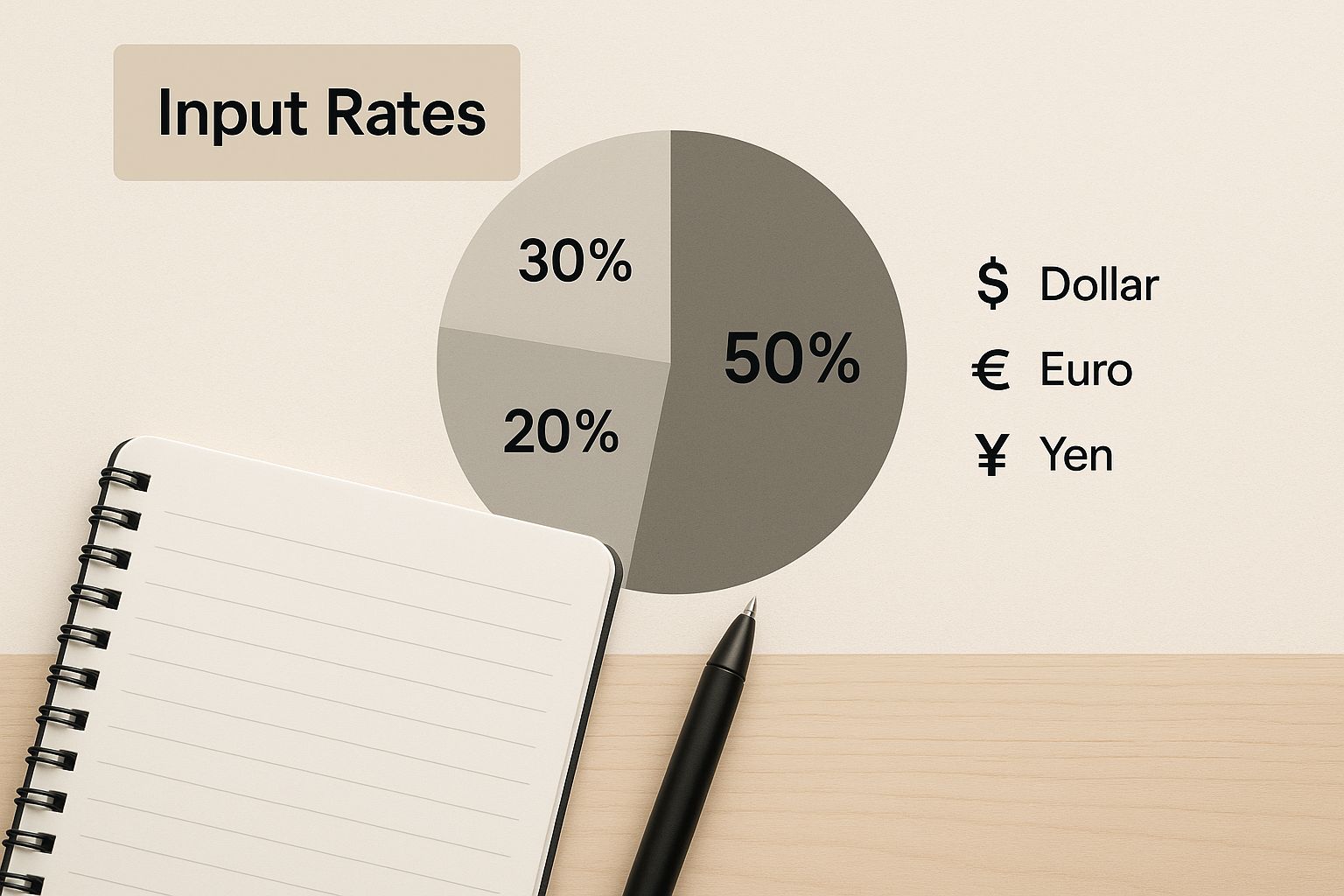
It really highlights how that one crucial factor, your IR35 determination, sends your earnings down two completely separate roads.
Working Inside IR35
When a contract lands inside IR35, you are essentially treated as an employee for tax purposes. This means your income is run through a payroll system, almost always through an umbrella company. Here is what gets deducted before the money hits your account:
- PAYE Income Tax: This is taken at source, just like a regular employee, based on standard UK tax bands.
- Employee’s National Insurance: A standard deduction from your earnings for your NI contributions.
- Employer’s National Insurance: This is a big one. The umbrella company has to pay this, and they deduct it from the overall assignment rate the client pays them.
- Apprenticeship Levy: Another employment cost that is deducted from the gross funds.
- Umbrella Company Margin: This is their fee for managing your payroll and giving you employment rights.
These deductions stack up, and it is why your take-home pay is often noticeably lower on an inside IR35 contract. You are not just paying your own tax; the total cost of employment is being covered. For more on this, check out our guide on IR35 and high take-home pay options.
Operating Outside IR35
Being outside IR35 means you are recognised as a genuine business, usually operating through your own limited company. This gives you far more control and tax efficiency. Your company is paid the gross contract value, and you decide how to pay yourself from there.
The process is totally different: you pay yourself a small, tax-efficient salary (often up to the National Insurance threshold), pay Corporation Tax on your company's profits, and then take the rest as dividends. Dividends are taxed at a much lower rate than salary income, which is the key to higher take-home pay.
The financial gap between these two statuses can be genuinely shocking. Let us look at a quick comparison to make it real.
Inside vs Outside IR35 Pay Breakdown (£500 Day Rate)
To see the numbers side-by-side, here is a typical breakdown for a contractor on a £500 per day rate, working 44 weeks a year. This illustrates just how differently the deductions are applied.
| Pay Component | Inside IR35 (Via Umbrella) | Outside IR35 (Limited Company) |
|---|---|---|
| Gross Annual Invoice Value | £110,000 | £110,000 |
| Employment Costs (Employer's NI, Levy) | ~£13,500 | £0 |
| Umbrella Margin (Example) | ~£1,200 | £0 |
| Gross Pay for Tax | ~£95,300 | £110,000 (Company Revenue) |
| PAYE Tax & Employee's NIC | ~£28,000 | N/A (Handled via Salary/Dividends) |
| Corporation Tax (@19%) | N/A | ~£18,800 (on profit after salary) |
| Salary & Dividend Tax | N/A | ~£8,500 (example mix) |
| Estimated Annual Take-Home Pay | ~£66,100 | ~£81,500 |
| Effective Take-Home Percentage | ~60% | ~74% |
As you can see, the difference is huge. A contractor earning £110,000 a year could take home over £15,000 more by operating outside IR35. This is not a small change; we are talking about a difference of around 20% in your net income.
This is exactly why getting to grips with an IR35 take home calculator is a non-negotiable first step before you sign any contract. It gives you the clarity you need to make the right financial decisions for your business.
Using Your Calculator Results for Financial Planning
Once the calculation is done and you have a clear projection of your take-home pay, you can use this figure as the bedrock of smart financial planning. It turns a simple estimate into a solid strategy for managing your money.
First, get to grips with the breakdown of deductions. Your calculator summary shows exactly where every pound of your day rate is going. You can see the chunks allocated to Income Tax, both employee's and employer's National Insurance Contributions (if you're inside IR35), and any umbrella company margins. This transparency is vital.

Building a Realistic Budget
With a reliable net income figure in hand, you can build a monthly budget that genuinely reflects your financial reality. This projection lets you move beyond guesswork and start allocating your funds with confidence.
- Fixed Costs: Start by listing your non-negotiables like your mortgage or rent, utility bills, and any loan repayments.
- Variable Spending: Then, account for the costs that change month-to-month, such as groceries, travel, and entertainment.
- Financial Goals: Finally, earmark funds for your future, whether that's savings, investments, or topping up your pension to build long-term wealth.
This structured approach helps you live within your means and sidestep financial stress. It also shines a light on where your money is going, giving you a clear path if you're looking into how to maximise take-home pay as a contractor.
Preparing for Tax Liabilities and Making Contract Decisions
Your calculator results become incredibly powerful when you are making decisions about the future. For contractors operating outside IR35, the projection helps you set aside the right amount for Corporation Tax and personal tax on your dividends, preventing any nasty surprises from HMRC.
Using an IR35 take home calculator transforms you from a passenger to the pilot of your financial journey. It provides the foresight needed to budget effectively, prepare for tax obligations, and negotiate contracts from a position of strength.
This foresight is also invaluable when you are assessing new opportunities. A potential contract might look great on paper, but running the numbers through the calculator gives you the real-world financial outcome. It empowers you to negotiate a higher day rate or confidently walk away from roles that are not financially viable.
In the same way this tool helps with your personal planning, other specialised resources like a Delegation ROI Calculator can help you assess the financial benefits of strategic business decisions. By using these projections, you ensure every contract aligns with your financial goals.
How to Get a Calculation You Can Actually Trust
An IR35 take-home calculator is a brilliant tool, but its accuracy depends on the numbers you provide. A few small slip-ups can produce a final figure that is way off, leaving you with an unreliable forecast. Let us walk through the common tripwires to avoid.
The biggest one is being too optimistic about your billable days. It is easy to just multiply your day rate by the length of the contract, but that is not the real world. You have to account for bank holidays, your own well-deserved time off, and it is always wise to build in a buffer for sick days.
Do Not Forget the Deductions
Another common oversight is forgetting to factor in the deductions that come out before the money ever hits your account. Little things like student loan repayments and pension contributions can make a big difference.
Make sure you get these details right for a true picture of your earnings:
- Student Loan Repayments: You need to select the right plan. Plan 1, Plan 2, and Postgraduate Loans all have different repayment thresholds and percentages.
- Pension Contributions: Whether you are paying into a private SIPP or using an umbrella company’s scheme, these contributions directly reduce your taxable income.
- Your Tax Code: Most calculators will assume a standard tax code. If HMRC has issued you a different one, you will need to account for it, as it directly impacts your PAYE calculation.
The whole point of a calculator is to get a realistic forecast, not just a feel-good number. Factoring in all your financial commitments is what makes it a genuinely useful tool for budgeting.
Expenses, Estimates, and Knowing the Limits
If you are operating outside IR35, getting your business expenses wrong is another major pitfall. You can only claim for costs that are "wholly and exclusively" for your business. Do not just guess or try to include personal spending, keep meticulous records of everything from your accountancy fees to essential travel.
It is also crucial to remember what a calculator is: a solid estimate, not a guarantee set in stone. Tax rules can change, and so can your personal circumstances.
Since the reforms in April 2021, your end client is now responsible for determining your IR35 status. The financial difference is massive. For example, a contractor on a £500 day rate outside IR35 might take home between £74,000–£78,000. If that same contract is deemed inside IR35, PAYE deductions could slash that figure by 20–30%.
If you want to dig deeper into this, you can explore the key differences on GoForma.com. By steering clear of these common mistakes, you can turn a simple calculation into a reliable guide for your financial journey as a contractor.
Answering Your Top IR35 Calculator Questions
When you first use an IR35 take-home calculator, it is completely normal to have a few questions. The numbers, the terms, and the deductions can all feel a bit much at first glance. But understanding these details is the key to properly managing your contractor finances.
We have pulled together the most common queries we see. Think of this as your cheat sheet for understanding exactly what the calculator is telling you, especially when you are looking at contracts that fall inside IR35.
Why Is Employer’s National Insurance Coming Off My Rate?
This is probably the number one question we get, and it is an important one to understand. When you work inside IR35 through an umbrella company, they are legally your employer. HMRC rules state that all employers have to pay Employer’s National Insurance Contributions (NICs) on the earnings of their employees.
This cost, along with the Apprenticeship Levy, is taken from the total assignment rate your client pays before your own gross pay is calculated. It is not a shady deduction; it is a standard, compliant practice for every legitimate umbrella company. It simply reflects the total cost of having you on the project.
Can I Still Claim Business Expenses Inside IR35?
If your contract is deemed inside IR35, your ability to claim tax relief on expenses shrinks dramatically, putting you in a similar position to a permanent employee. Everyday costs like your regular commute to the client's office or lunch are generally not claimable.
That said, there are some exceptions. You might be able to claim for specific expenses if they were incurred "wholly, exclusively, and necessarily" in the performance of your duties and you have not been reimbursed for them. It is always smart to speak with your umbrella company or accountant to get clarity on your specific situation.
A good online calculator will give you a very accurate estimate, but it is still a guide. Your final take-home pay can be influenced by things the calculator does not know about, like a unique tax code or what you have earned earlier in the tax year.
How Accurate Are These Online IR35 Calculators?
A well-built online IR35 take-home calculator can be incredibly accurate. The good ones are always updated with the latest tax bands and National Insurance rates directly from HMRC, making them a fantastic tool for forecasting your earnings and comparing different contract offers.
However, it is vital to remember that it provides an estimate. Your final net pay might be slightly different because of variables a simple calculator cannot factor in, such as:
- A unique tax code issued to you by HMRC.
- Your earnings from other jobs within the same tax year.
- Any specific pension or salary sacrifice arrangements you have.
The bottom line is to use the calculator as your go-to guide for planning, but always treat your official payslips as the final word.
What’s the Difference Between My 'Contractor Rate' and the 'Assignment Rate'?
Getting this distinction right is fundamental to making sense of your payslip. Your 'contractor rate' is the day rate you agree with your end client, the figure you settled on for your expertise.
The 'assignment rate' is a bigger, all-inclusive figure used between the recruitment agency and the umbrella company. This rate bundles your contractor rate together with all the associated employment costs, namely, Employer’s NI, the Apprenticeship Levy, and the umbrella company’s margin. The agency pays this full amount to the umbrella, which then deducts those costs to calculate your gross pay.
Ready to compare your options and find a compliant, trustworthy umbrella company? At UmbrellaCompany.com, we make it easy to see which providers best suit your needs. Find your perfect match in minutes. https://umbrellacompany.com


