


Starting your freelance journey is an incredible feeling. You're the boss, the expert, and the one calling the shots. But with that freedom comes a level of responsibility you probably did not have as an employee. This is where freelancer professional indemnity insurance comes in; it is not just paperwork, it is a crucial safety net for your business.
This guide explains what the insurance covers, why you need it, and how to choose the right policy. Think of it this way: if a client claims your work or advice cost them money because of an error or negligence, this insurance has your back. It is a smart investment in your business’s future and, just as importantly, your own peace of mind.
Why Freelancers Need a Financial Safety Net

When you go freelance, you are putting yourself forward as a specialist. Whether you are a web developer, a marketing consultant, or a graphic designer, clients are paying for your expertise. And with that expertise comes accountability. Even the most meticulous professionals can make an honest mistake, face a misunderstanding, or get tangled in a client dispute that escalates into a costly legal claim.
Professional indemnity (PI) insurance is essentially protection for your professional opinion and skills. If a client accuses you of providing negligent work that caused them a financial loss, your policy steps in to cover legal defence costs and any potential compensation payments.
Busting Common Insurance Myths
A lot of freelancers, especially in creative and tech fields, mistakenly believe this type of cover is only for traditional professions like architects or accountants. This is a risky assumption. The truth is, any professional who provides a service or offers advice can be held liable for mistakes.
A recent study brought this home, highlighting a major gap in awareness. It revealed that only 35% of self-employed professionals had professional indemnity insurance. Worse still, half of those surveyed thought they did not need it because their work could not cause physical injury. This completely misses the point of PI cover, which is designed to protect you against claims of financial loss or reputational damage, not just physical harm. You can dig into more of these findings from the AXA study on Insurance Business Magazine.
Essential Cover for Every Freelancer
The reality is that a claim can pop up from anywhere. A tiny coding error might crash a client's website during their biggest sale of the year. A marketing campaign might not hit the specific targets you projected in your proposal. Even if a claim has no merit, the legal fees to defend yourself can be financially devastating.
Let us quickly summarise why this cover is so important for today’s freelancers.
Why You Need Professional Indemnity Insurance
| Reason | How It Protects Your Business |
|---|---|
| Client Requirements | Many larger companies and public sector organisations simply will not hire you without it. |
| Professional Reputation | Having insurance shows you are a serious professional who stands behind their work. |
| Financial Security | It shields your personal and business savings from the crippling costs of a legal battle. |
| Peace of Mind | You can focus on doing great work without constantly worrying about a potential "what if" scenario. |
Ultimately, having the right cover in place allows you to focus on what you do best: delivering brilliant work for your clients.
Getting to Grips with Your Insurance Cover

Alright, let us cut through the jargon. What does freelancer professional indemnity insurance actually do for you? At its core, it is your professional safety net. It is designed to protect you if a client claims your work, advice, or service caused them to lose money.
Think of it as a financial shield for your expertise. If a client sues you, a solid policy will step in to cover the legal fees and any compensation you might have to pay. This protection is crucial for any freelancer, regardless of how you are set up, whether you are a sole trader or working through a more formal structure. If you are curious about different setups, you can get a better sense by exploring what an umbrella company is and how they function.
What You're Actually Covered For
A good professional indemnity policy is built around a few key pillars of protection. Knowing what these are helps you see just how valuable this cover can be for your freelance business. Let us break them down with some real-world examples.
Professional Negligence: This is the big one and the most common reason for a claim. It covers you if a client accuses you of making a mistake or providing bad advice that ended up costing them. Imagine you are a web developer and a coding error you made knocks a client's e-commerce site offline during a Black Friday sale. That is a huge loss of revenue, and they could hold you responsible.
Infringement of Intellectual Property: This protects you if you accidentally use copyrighted material without the right permissions. For instance, as a content writer, you might unknowingly use a copyrighted photo in a client's blog post. If the image owner sends a legal demand, your insurance can handle it.
Accidental Breach of Confidentiality: We all make mistakes. If you accidentally share sensitive client information, this part of your policy kicks in. A classic example is a marketing consultant emailing a top-secret campaign strategy to the wrong person, putting the client’s plans at risk.
Defamation, Libel, and Slander: This covers you if a client alleges that something you have said or written has damaged their reputation. A freelance social media manager, for example, could publish a post that a competitor claims is defamatory, sparking a lawsuit.
Understanding the Exclusions
Just as crucial is understanding what is not covered. Knowing the limits of your policy helps you manage your risks properly. Professional indemnity insurance is very specific: it is for claims related to your professional services and the financial losses they might cause.
Your policy generally will not cover intentional wrongdoing, criminal acts, or any claims for bodily injury or property damage; that is what public liability insurance is for. It is also common for standard policies to exclude claims from clients based in certain countries, like the USA and Canada, unless you have purchased specific worldwide cover.
By getting a clear picture of both the inclusions and exclusions, you can be sure you have got the right protection sorted. This is not just about dodging a financial bullet; it is about safeguarding the professional reputation you have worked so hard to build. With that peace of mind, you can focus on what you do best: delivering fantastic work for your clients.
Real-World Claims Scenarios for Freelancers
Insurance policies often feel like a box-ticking exercise, a bit abstract and hard to connect with. But to really grasp the value of professional indemnity insurance, let us look at some real-life situations where it can be an absolute business-saver.
These are not far-fetched horror stories; they are the kind of mishaps that can happen to any freelancer, no matter how careful they are.
Even if a claim against you is completely groundless, the legal fees just to prove your innocence can be staggering. Without the right cover, defending your reputation could easily sink your business.
The Marketing Campaign That Missed the Mark
Imagine you are a freelance marketing consultant hired to launch a big digital ad campaign. Based on your experience and solid data, you forecast a healthy jump in leads for your client. But then, the market takes an unexpected turn, and the campaign just does not deliver the results you both hoped for.
The client is out of pocket and unhappy. They demand a full refund plus compensation for their "lost investment," blaming your professional advice. This is a classic negligence claim. Your professional indemnity policy would be the one to step in, covering the legal costs to defend you and paying for any settlement needed to make things right.
The Graphic Designer and the Copyright Claim
Here is another all-too-common scenario. A graphic designer creates a brilliant new logo for a startup. Everyone is delighted. Fast forward six months, and a solicitor's letter lands on the client's desk. Another company is claiming the logo is a bit too similar to their registered trademark.
Suddenly, the client is looking at you, the designer, as the source of a very expensive intellectual property dispute. Without insurance, you would be facing a mountain of legal bills and potential damages. With a policy, the insurer handles it, appointing and paying for legal experts to manage the whole mess.
Do not think for a second these examples are rare. In the UK, professional indemnity claims are the most common type of business insurance claim, accounting for over a quarter (26%) of all claims filed each year. It just goes to show the real risks freelancers run every day. You can read more about the prevalence of business insurance claims to get the full picture.
When a claim does happen, knowing what to do is half the battle. It is always a good idea to learn how to negotiate an insurance settlement effectively to ensure you get a fair outcome. These scenarios prove that professional indemnity insurance is not just about covering your mistakes; it is about protecting your business from the inherent risks of being an expert for hire.
How Professional Indemnity Premiums Are Calculated
So, what is this actually going to cost? It is usually the first question on any freelancer's mind, and the honest answer is: it depends. There is no one-size-fits-all price tag because your premium is tailored to your specific freelance business.
Think of it this way: insurers are weighing up the likelihood of a claim being made against you. They look at your unique risk profile to work out a fair price for your cover. Let us break down exactly what they are looking at.
Key Factors Influencing Your Premium
Your premium is not a number plucked from thin air. Insurers carefully consider several moving parts of your business to get a clear picture of the risk involved.
- Your Profession: This is the big one. Some fields are inherently riskier than others. An IT contractor handling a multinational's entire cloud infrastructure faces a different level of potential liability than a freelance writer creating blog content. Higher risk often means a higher premium.
- Level of Cover: This one is pretty straightforward. The more protection you need, the more it will cost. A policy that covers you for £1 million will naturally have a higher premium than one with a £250,000 limit.
- Annual Turnover: Your income gives insurers a sense of the scale of your projects. A higher turnover often means you are working on bigger, more valuable contracts. If something went wrong, the potential claim could be huge, and your premium will reflect that. Keeping on top of your finances is vital, and our guide to accounting for contractors has some great tips on this.
- Claims History: Have you had to make a claim in the past? If so, insurers might see you as a higher risk, which could nudge your premium up. A clean slate, on the other hand, usually works in your favour.
This is why getting covered is so important. The stats do not lie.
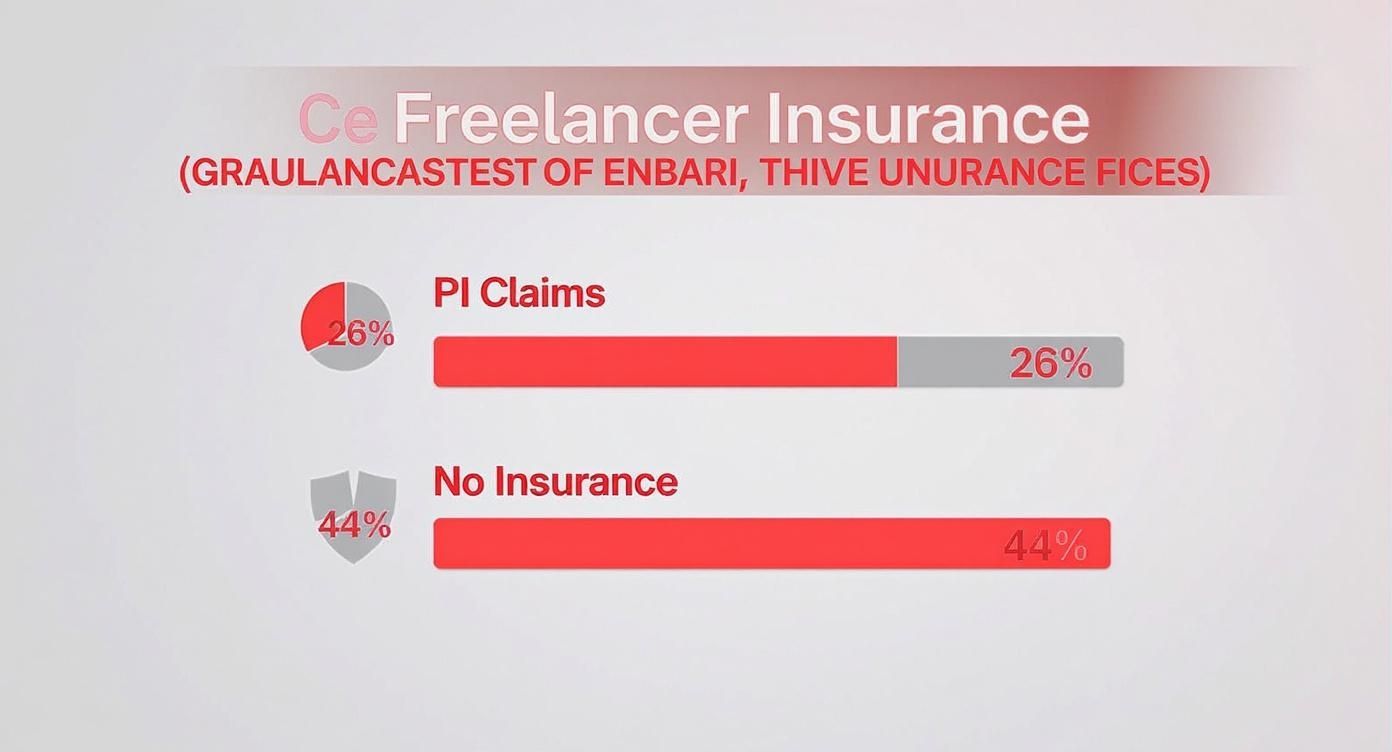
As you can see, professional indemnity claims make up a massive 26% of all business insurance claims. Yet a staggering 44% of freelancers are rolling the dice without any cover at all, leaving themselves completely exposed.
A Look at Estimated Costs
To bring this all to life, let us look at some ballpark figures. The table below gives you a rough idea of how premiums can vary by profession and the amount of cover you choose. Just remember, these are estimates; your actual quote will be based on your individual business details.
Estimated Annual Premiums by Profession
Illustrative examples of how your profession and chosen cover level can influence insurance costs.
| Freelance Profession | £500,000 Cover (Est. Annual Premium) | £1,000,000 Cover (Est. Annual Premium) |
|---|---|---|
| Freelance Writer | £90 – £150 | £140 – £220 |
| Graphic Designer | £120 – £200 | £180 – £280 |
| Marketing Consultant | £180 – £300 | £250 – £400 |
| IT Contractor | £250 – £450 | £350 – £600 |
As the numbers show, the cost can be quite manageable. It helps to reframe your thinking: freelancer professional indemnity insurance is not just another bill. It is a fundamental business investment that protects your hard-earned cash, defends your reputation, and gives you the peace of mind to do what you do best.
Choosing the Right Insurance Policy for You

So, you are ready to get covered but do not know where to begin? Do not worry. Picking the right freelancer professional indemnity insurance is not as daunting as it sounds. If you break it down, you can find a policy that fits your business like a glove and lets you sleep soundly at night.
The first move is to get a realistic picture of your business risks. Think carefully about the services you offer and the size of the contracts you manage. What is the absolute worst-case financial fallout for a client if a project goes south because of your work?
Assess Your Risks and Contractual Needs
Before you even think about getting quotes, dig out your client contracts. It is common for larger clients to state the minimum level of professional indemnity cover you must have. This is not just a suggestion; it is often a deal-breaker and gives you a solid baseline for the cover you need.
What if your contracts do not mention a figure? Your industry is the next big clue. A freelance IT specialist handling critical systems for a financial firm needs a far higher limit than a copywriter creating website content. To get a better handle on what should be in your agreements, looking over a freelance contract template for the UK is a really smart move.
Key Policy Features to Understand
As you start comparing policies, you will run into some industry jargon. Getting your head around these key terms is crucial for making sure you are properly protected.
Level of Indemnity: This is the big one. It is the maximum amount the insurer will pay out on a single claim. Make sure this number aligns with both your client's demands and the potential financial damage an error could realistically cause.
Policy Wording: Never just read the highlights. The full policy wording is the rulebook, detailing exactly what is covered and what is not. Look for specifics that matter to your work, like cover for intellectual property disputes if you are a graphic designer.
‘Claims Made’ Basis: This is a critical detail. Most PI policies are ‘claims made’, which means the policy must be active when the claim is filed, not necessarily when you did the work.
Retroactive Cover: This handy feature protects you from claims related to work you did before your current policy began. It is absolutely essential for covering your entire work history, not just the projects you have taken on recently.
Always check if retroactive cover is included as standard or if it is an add-on. Without it, all your past projects are left uninsured, which is a massive risk you do not want to take.
Comparing Quotes and Insurers
Once you have got a clear idea of what you need, it is time to shop around. But remember, the cheapest quote is rarely the best deal. You need to look past the price and investigate the insurer's reputation.
Check out reviews from other freelancers and see what people say about their claims process. A low premium is worthless if the insurer vanishes or makes life difficult when you actually need their help.
By taking this measured approach, you can confidently pick a policy that gives you robust protection, keeps your clients happy, and offers genuine peace of mind.
Your Professional Indemnity Insurance Questions Answered
We get it; insurance can feel like a minefield of jargon and confusing clauses. To help cut through the noise, we have pulled together some plain-English answers to the questions we hear most often from freelancers about professional indemnity cover.
Do I Still Need PI Insurance if I Work Through a Limited Company?
Yes, absolutely. Setting up a limited company is a smart move that creates a legal wall between your personal finances and your business, protecting your home and savings. But that wall does not protect the business itself from being sued.
If a client claims you have been negligent, they will make that claim against your limited company. This means the business is on the hook for all the legal defence bills and any compensation that might be awarded. A solid professional indemnity policy is what protects your company's bank account, making sure a single dispute does not threaten to sink the whole ship.
My Client Contract Does Not Mention Insurance. Should I Bother?
We would strongly recommend it. It is true that many client contracts now insist on freelancer professional indemnity insurance, but its real value is in protecting you, not just ticking a box for a client.
Think of it this way: a client can sue you for causing them financial loss at any point if they feel your work was subpar, regardless of whether your contract mentions insurance. Without your own policy, you are left completely exposed. It is a crucial safety net that guards your finances and, just as importantly, your hard-earned professional reputation. For contractors, getting a handle on other obligations like IR35 is also vital; you can learn more about what IR35 is and how it affects you in our detailed guide.
What is Retroactive Cover and Why Does it Matter?
Retroactive cover is a hugely important feature that protects you against claims that pop up today for work you did in the past. When you take out a policy, you can set a ‘retroactive date’. Ideally, this should go all the way back to the day you first started trading as a freelancer.
For instance, imagine you buy a policy today and set the retroactive date to three years ago. If a client you worked with two years ago suddenly decides to file a claim now, you are covered. Without that retroactive cover, your policy would only protect work you have done since the policy started, leaving all your previous projects vulnerable.
How is This Different from Public Liability Insurance?
It is a common point of confusion, but they cover two completely different kinds of risk. Many freelancers actually need both to be properly protected.
Professional indemnity insurance is all about protecting you from claims of financial loss that stem from your professional services or advice. Think negligence, mistakes, or accidentally leaving something important out.
Public liability insurance, on the other hand, deals with the physical world. It covers claims if your business activities cause an injury to someone or damage to their property. A classic example is a client tripping over your laptop cable at their office and getting hurt; that is a job for public liability.
At UmbrellaCompany.com, we make it easy to compare trusted, compliant umbrella companies that can support your freelance career. Find the right fit for your needs in just a minute. https://umbrellacompany.com


