


Think of contractor indemnity insurance as your professional safety net. It is the policy that activates if a client claims your advice or work caused them a financial loss. It is designed to cover your legal fees and any compensation you might have to pay.
This is completely different from public liability insurance, which covers physical injury or damage to property.
Why This Insurance Is a Non-Negotiable for Contractors
As a contractor, your expertise is what clients pay for. They trust your skills and knowledge to get the job done right. But let’s be realistic, even the most careful professionals can make a mistake. A tiny oversight or an unintentional error in advice could lead to a client claiming they have lost a significant amount of money.
This is exactly where contractor indemnity insurance proves its worth.
Often called professional indemnity (PI) insurance, it is built specifically to shield you from claims of professional negligence. It is a financial backstop, covering the potentially staggering costs of a legal defence and any damages awarded. Without it, a single disgruntled client could put your business, and even your personal finances, at serious risk.
The Core Purpose of Indemnity Cover
At its heart, contractor indemnity insurance is all about managing professional risk. It is there to handle the "what if" scenarios that come with providing specialist services and advice.
Imagine an IT contractor who installs new software, only for a bug to crash the client's system and halt their sales for a day. Or picture a business consultant whose strategy does not deliver the projected growth, prompting the client to claim they lost money by following that advice.
In situations like these, your policy is designed to step in. It is not just about paying out compensation; it gives you the financial clout to defend your professional reputation without having to fund a legal battle out of your own pocket. In fact, many clients, especially large corporations and public sector bodies, will not even consider hiring a contractor who cannot show proof of having it.
Key Risks It Defends Against
Getting to grips with what this insurance actually covers is the key to seeing its value. A solid policy will protect you against a whole range of professional hazards, making sure you are ready for whatever comes your way. To really understand its role, it is helpful to see how it differs from other cover like professional liability insurance for contractors.
Here are some of the main things it protects you from:
- Professional Negligence: This is the big one. It covers claims that a mistake or error in your work caused a financial loss for your client.
- Unintentional Breach of Confidentiality: Accidentally disclosed sensitive client information? The policy can cover the legal fallout.
- Loss of Documents or Data: This protects you if you lose crucial client documents or digital files that were in your care.
- Intellectual Property Infringement: This provides cover if you unintentionally use copyrighted material or infringe on a trademark during your work.
For a deeper dive, check out our guide on freelancer's professional indemnity insurance, which has even more detail. Ultimately, this insurance gives you the peace of mind to stop worrying and focus on what you do best: delivering fantastic work for your clients.
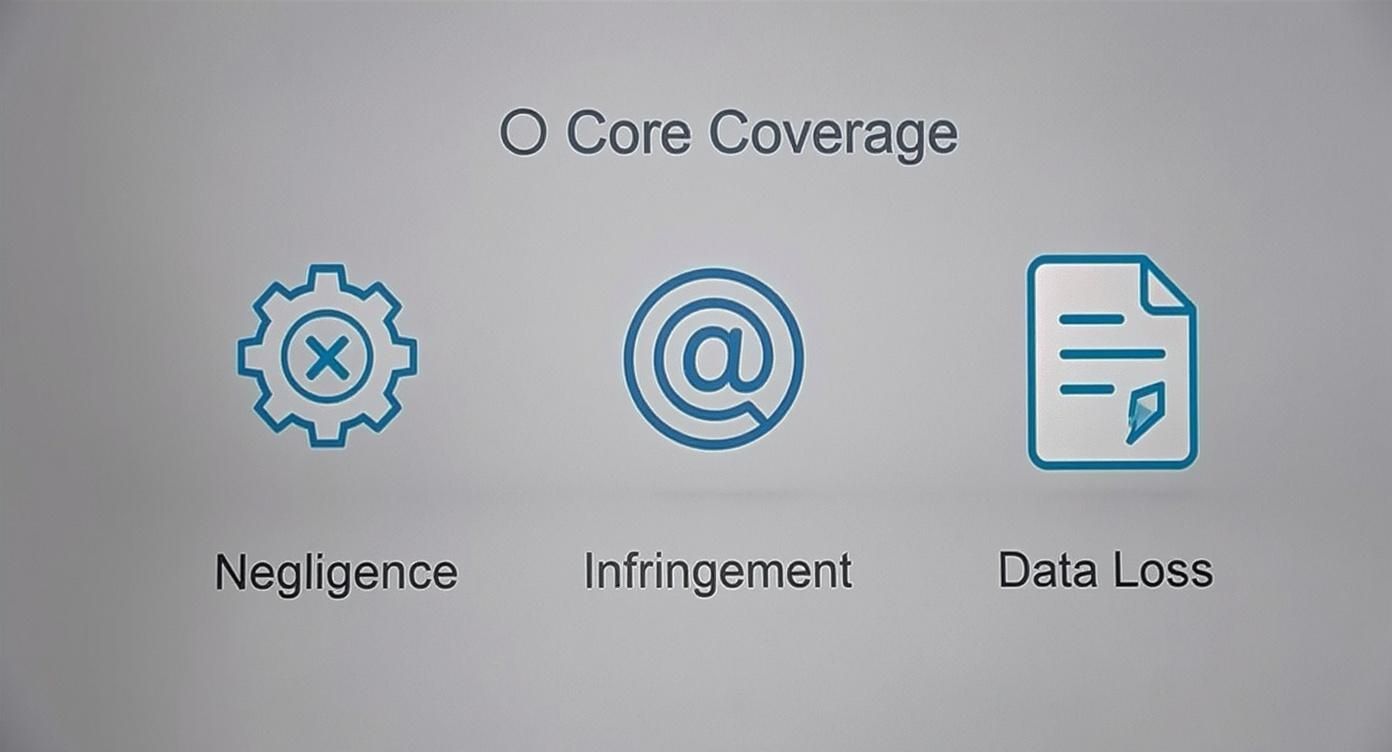
Understanding Your Core Coverage Options
When you open a policy document, the legal jargon can feel overwhelming. In reality, contractor indemnity insurance is all about safeguarding you from the everyday challenges that come with providing your services. Think of it as a multi-layered shield: each tier is there to catch a different type of claim, so a single mistake will not leave you out of pocket.
Professional Negligence: The Cornerstone Of Your Policy
Mistakes happen. Whether it is a miscalculated estimate or code that does not behave as expected, professional negligence cover activates when a client insists your work caused them a financial loss.
- Imagine a project manager underestimates the build time, leading to expensive downtime.
- Or picture a software developer who ships a module with a critical bug, knocking a retailer’s site offline during its busiest window.
Professional negligence cover steps in when your specialised skills or advice fall short of the expected standard and a client’s bottom line takes the hit.
This is the bedrock of your indemnity policy, the safety net for honest errors.
Protecting Intellectual Property And Confidentiality
Your role often involves juggling sensitive data or crafting creative assets. Two common pitfalls are:
- Intellectual Property (IP) Infringement: Maybe a designer uses an image without the proper licence, or a consultant reworks material that is inadvertently trademarked.
- Breach Of Confidentiality: Perhaps a business plan ends up in the wrong inbox, or merger details slip out in a group chat.
These protections are essential in a world where information is a prized commodity.
Defending Against Data Loss And Document Mismanagement
You are the custodian of client records, both digital and physical. Misplacing a file or suffering a hardware failure can trigger costly recreations and, worse, damage your reputation.
Most policies include cover for loss of documents or data. Picture an accountant who loses a hard drive containing a year’s worth of financials. Rebuilding that archive could cost a fortune, but your insurance steps up to foot the bill.
For extra peace of mind, make sure your client agreements reference these protections. Our detailed article on using a freelance contract template in the UK shows you how to set clear expectations from day one. By spelling out everyone’s responsibilities early on, you create a smoother, more secure partnership.
How Market Trends Affect Your Insurance Costs
The insurance market ebbs and flows like any other. Spotting these cycles can save you money on contractor indemnity insurance and make renewal season far less painful.
Right now, insurers are competing to win your business. In a ‘soft’ market, competition ramps up and premiums dip.
The Shift To A Soft Insurance Market
In practice, a soft market means more insurers at the table, all vying to underwrite your risk.
- Lower Premiums: Increased capacity has driven average annual costs down.
- Broader Coverage: You will see fewer carve-outs and more comprehensive policies.
- Higher Limits: It is often easier to secure larger indemnity sums at similar prices.
This turning of the tide has even reached sectors once deemed too risky, giving contractors unexpected wiggle room.
What This Means For Your Sector
Construction and property professionals are benefiting in a big way. The UK’s professional indemnity insurance market for contractors now stands at £3.3 billion, covering roughly 1.5 million policyholders across 500 professions.
Insurers have trimmed premiums by around 10-25% for smaller firms, and they are relaxing strict exclusions on issues like cladding and fire safety. For deeper insight, check out this property and construction trends analysis.
Even if you thought you had maximised your protection, now is the moment to revisit those options and fill any gaps.
Capitalising On The Current Climate
With the market swinging in your favour, now is the time to secure a new policy or refresh your existing one. You might discover you are overpaying or missing out on enhancements you did not think possible.
Taking the time to compare quotes can lead to direct savings that boost your bottom line. It is not just about cost; it is about ensuring your cover is fit for purpose and reflects the current risks in your industry.
Curious how a smaller premium could affect your take-home pay? Try our contractor rate calculator to see the difference.
How to Select the Right Indemnity Policy

Choosing the right contractor indemnity insurance can feel overwhelming, but breaking it down into a few simple steps makes it much more straightforward. Getting this right is all about matching the cover to your specific risks, so you are not paying for things you do not need.
The goal is to find a policy that fits your professional life like a glove. This guide will walk you through exactly how to do that.
How Much Cover Do I Actually Need?
First things first, let's figure out the level of cover you need. The answer is often right there in your client contracts. Many organisations, especially in the public sector or larger corporations, will state a minimum level of indemnity insurance you must have before you can even start.
If your contract is silent on the matter, look at what is standard for your industry. A freelance IT consultant will likely have different requirements than a marketing contractor. Think about the worst-case scenario: what is the maximum financial damage a client could realistically claim if something went wrong? That figure is a solid starting point for your indemnity limit.
It is always better to have a bit more cover than you think you need. The price difference is usually small, but the peace of mind is enormous. Defending a claim can get very expensive, very quickly, even when you are not at fault.
Understanding Key Policy Terms
When the quotes start rolling in, you will come across some jargon. Do not worry, it is not as complicated as it sounds. The two most important terms to understand are the 'excess' and the 'retroactive date'.
- Policy Excess: This is simply the amount you agree to pay towards a claim before the insurer steps in. If your excess is £500 and a claim costs £10,000 to resolve, you pay the first £500, and the insurer handles the remaining £9,500. A higher excess can lower your premium, but just make sure it is an amount you could comfortably find if you needed to.
- Retroactive Date: This is a crucial one. It essentially backdates your cover to protect work you have already completed. If you are switching insurers or buying a policy for the first time, you need to make sure this date covers your past projects to avoid any gaps in your protection.
Comparing Your Insurance Quotes
Once you have a few quotes, it is time to compare them properly. It is tempting to just go for the cheapest, but the real value is in the details. The small print is what really counts.
To make this easier, we have put together a quick comparison table to highlight what you should be looking for.
Key Features to Compare in Contractor Indemnity Insurance Quotes
This table will help you cut through the noise and compare the essential elements of different policies, so you can make a choice you feel confident about.
| Feature | What to Look For | Why It Matters |
|---|---|---|
| Indemnity Limit | A limit that meets your contractual obligations and reflects the value of your projects. | This is the maximum your insurer will pay out. Being underinsured could leave you with a massive bill. |
| Policy Excess | An amount you are comfortable paying out-of-pocket if a claim arises. | A high excess saves money on premiums but could create a cashflow headache if you need to make a claim. |
| Key Exclusions | Any specific activities, regions, or types of claims that are not covered. | Understanding exclusions stops you from getting caught out. Some policies, for instance, will not cover work in North America. |
| Retroactive Cover | A date set at the start of your first policy to ensure all past work is protected. | Without this, you are exposed to claims from old projects you finished before your current policy began. |
Comparing quotes on your own can be a bit of a minefield. That is why working with a specialist broker who really understands the contracting world can be a game-changer. They can translate the jargon, point out potential traps, and find a policy that is a perfect fit for your line of work.
Remember, this is about protecting your business and your livelihood. For contractors navigating different working arrangements, insurance is just one piece of the puzzle. Our guide on finding the right umbrella company for contractors can help with other key parts of your setup. You might also want to look into general insurance offerings to make sure all your bases are covered.
Getting to Grips with Specialist Risks and Exclusions

It is a simple truth: not all contractor risks are the same. Because of that, your contractor indemnity insurance must be tailored to the real world you work in. A generic, off-the-shelf policy might feel like you are ticking a box, but it can leave you dangerously exposed, especially in high-stakes fields like construction and IT where a single mistake can get very expensive, very quickly.
The first step to getting proper protection is to really understand the specific risks your line of work presents. An IT contractor handling a client's sensitive financial data needs a policy that screams "cyber liability and data loss cover," while a building surveyor is worried about completely different professional hazards.
High-Risk Sectors and How Cover is Evolving
Some industries just come with more baggage. The risks are bigger, more complex, and standard policies often struggle to keep up. The good news is that insurers are always adapting, and the cover available today is often far more sophisticated than it was just a few years ago.
Construction Contractors
The construction world has had a tough time with insurance lately, particularly around fire safety and cladding. In the wake of major incidents like the Grenfell Tower tragedy, many insurers became nervous and simply applied blanket exclusions to that kind of work, leaving many good contractors without cover.
But things are starting to shift. The market is slowly opening back up, with some insurers now willing to offer limited cover for cladding and fire safety risks again. The catch? You need to show you have rock-solid risk management processes and are completely transparent. This is a massive step forward, helping firms get the protection they need to take on those complex but essential projects. You can get more insights on the changing construction professional indemnity insurance market.
IT and Tech Contractors
For those in IT, the risks are digital, but the financial consequences are just as real. Think about it: a bug in your code brings down a client’s e-commerce site during a sale, or a small security oversight leads to a massive data breach. These scenarios can easily spiral into claims worth hundreds of thousands of pounds.
If you are an IT contractor, your policy absolutely must include cover for:
- Cyber liability: Your first line of defence against claims from data breaches or cyber-attacks.
- Intellectual property infringement: Covers you if you accidentally use copyrighted code or a licensed piece of software without permission.
- Breach of contract: Protects you if a client argues your work did not deliver what was promised in the contract.
Understanding the Fine Print: Common Policy Exclusions
Knowing what your policy covers is only half the battle. You also need to be crystal clear on what it does not cover. Every single indemnity policy has a list of exclusions, and ignoring them can lead to a very nasty shock right when you need your insurer's help the most. Reading the small print is not just a good idea, it is non-negotiable.
A policy exclusion is a specific situation or type of loss that your insurance policy will not pay out for. Overlook these, and your insurance could be worthless when you make a claim, leaving you to foot the entire bill.
Exclusions can differ from one insurer to the next, but some are so common they are almost universal. Here are a few big ones to watch out for:
- Deliberate or fraudulent acts: Insurance is for mistakes, not for malice. If a claim stems from something you did dishonestly or illegally, it will be thrown out.
- Contractual liability: Be careful what you sign. If you agree to a contract that holds you responsible for more than you would be under common law, your insurance might not cover that extra liability. Always have a legal expert check client contracts.
- Work outside your territory: Most UK policies only cover work you do in the UK. If you have clients overseas, particularly in the USA or Canada, you will almost certainly need to arrange specific worldwide cover.
- Things you already knew about: Your policy is for unforeseen problems. It will not cover claims related to issues you were aware of before you took out the insurance. Complete honesty during your application is absolutely crucial.
Got Questions About Contractor Insurance?
Dipping your toe into the world of contractor indemnity insurance can feel a bit confusing at first. To help clear things up, we have put together some of the most common questions we hear from contractors, along with some straightforward answers.
What Is This Going to Cost Me?
There is no single price tag for this kind of insurance. The premium you pay is based entirely on your unique situation. An insurer will weigh up a few key things to figure out the risk and, in turn, the cost.
These usually include:
- Your line of work: An IT consultant working with sensitive client data has a very different risk profile to a freelance copywriter. Your profession is a big factor in the final price.
- How much cover you need: This is a simple one. The higher the indemnity limit, the higher the premium. A £1 million policy will naturally cost less than one for £5 million.
- What your contracts demand: Large corporate clients often require you to have a high level of cover before they will even let you start. These contractual minimums will influence your premium.
- Your track record: If you have a clean slate with no previous claims made against you, you will almost always get a better rate.
I Run a Limited Company – Do I Really Need This?
Yes, you absolutely do. While setting up a limited company creates a legal wall between your personal and business finances, that wall does nothing to protect the business itself if a professional negligence claim lands on its doorstep.
If a client decides to sue you for a mistake that cost them money, they will be suing your limited company. Without contractor indemnity insurance, your business would have to foot the entire bill for legal fees and any compensation awarded. That is often more than enough to sink a small company. This insurance is what protects your business's assets and makes sure it can weather the storm.
What Does ‘Claims Made’ Actually Mean?
This is a crucial point to understand. Nearly all contractor indemnity policies are sold on a ‘claims made’ basis. In simple terms, this means the policy that is active when the claim is filed is the one that has to respond. It is not the policy you held when you did the original work.
A 'claims made' policy requires you to have continuous cover in place to be protected for your past work. If you let your policy lapse, you could be uninsured for projects you completed years ago. This is why maintaining cover, even during breaks between contracts, is so critical.
Imagine you finished a project in 2023. Two years later, in 2025, the client finds a major issue and decides to make a claim. It is your 2025 policy that will be called upon to handle it, not the one from 2023. This really drives home how important it is to keep your cover going without any gaps.
A Client Is Threatening to Make a Claim. What’s My First Move?
If you get an email, a letter, or even just a heated phone call hinting that a client is about to make a claim, you need to act fast, and smart. What you do in those first few moments can seriously affect the outcome.
Here are the three golden rules:
- Do Not Admit Anything: Whatever you do, avoid saying anything that sounds like you are accepting blame. No apologies, no offers to fix things for free. Wait until you have spoken to your insurer.
- Call Your Insurer Immediately: Your policy will have a clause about notifying them of potential claims as soon as possible. Pick up the phone, tell them what has happened, and send over any relevant documents.
- Follow Their Lead: Your insurer has a team of legal experts for this exact situation. They will guide you on what to do next. Follow their advice to the letter to make sure you do not accidentally do something that voids your cover.
The good news for contractors is that the UK’s professional indemnity market is looking quite healthy right now. In 2025, there are a record 37 insurers competing for business, which is driving premiums down. Many contractors are seeing rate reductions of 10% to 25%. To make sure you are getting the best deal and that your policy ticks all the boxes (like the updated RICS requirements), it is always a good idea to chat with a specialist broker. You can read more about what is happening in the market in recent UK insurance market outlook reports.
At UmbrellaCompany.com, we specialise in helping contractors find the perfect setup for their needs. Our comparison tool makes it easy to find a compliant and trusted umbrella company, so you can focus on your work with complete peace of mind.
Find your ideal umbrella company in minutes at https://umbrellacompany.com.


