


Think of a company’s Articles of Association as its internal rulebook. This is the core legal document, filed publicly with Companies House, that lays down the law on how the business must be run. For contractors, getting to grips with this rulebook is a non-negotiable part of your due diligence before you agree to work with any company. In this guide, we'll explain what they are, why they matter, and how to check them to protect your career.
What Are Articles of Association and Why They Matter
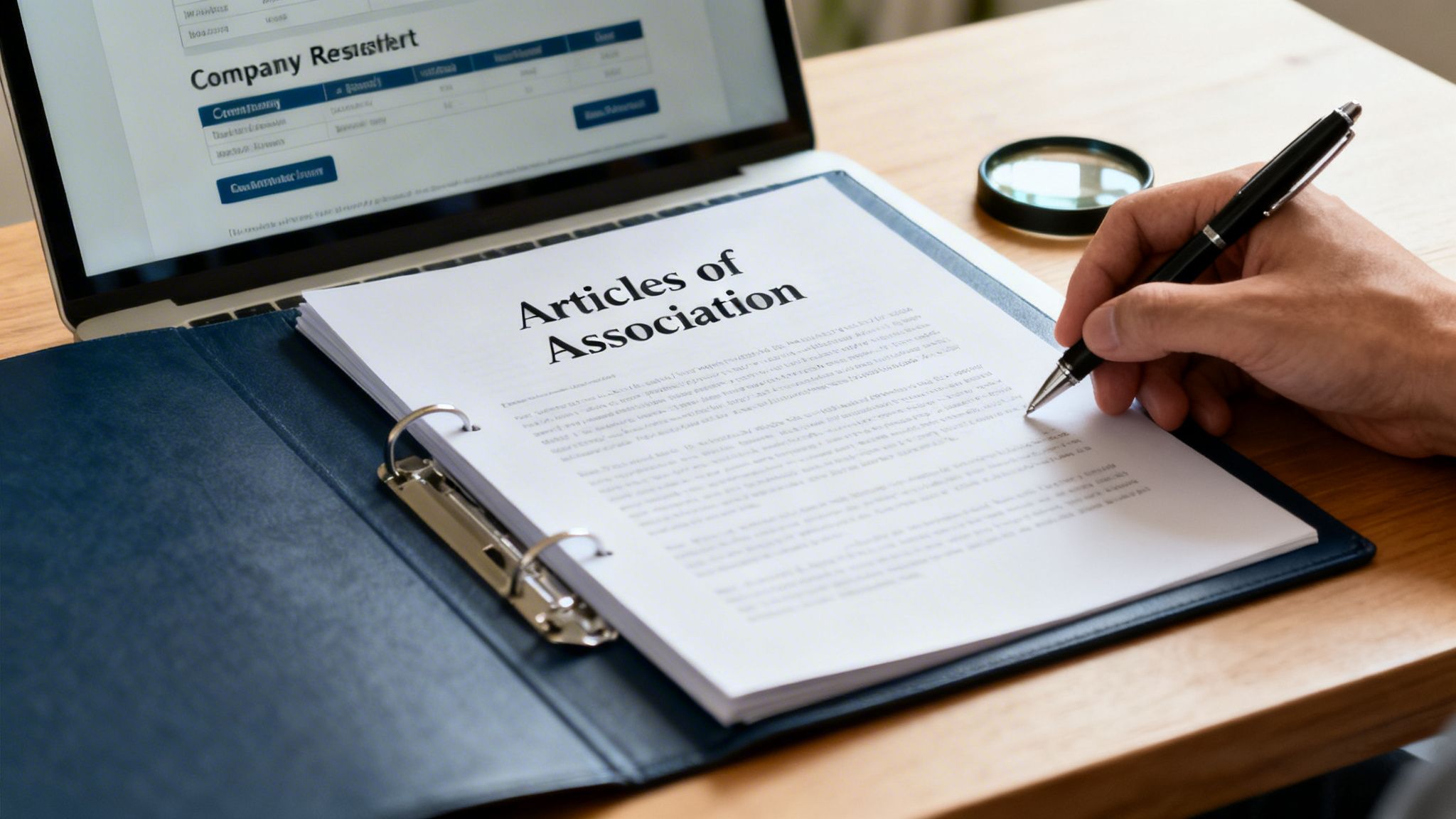
When you set up a limited company in the UK, you must establish a set of internal regulations. These regulations are its Articles of Association. They form a binding contract between the company and its shareholders, spelling out everyone’s rights, duties, and the exact procedures for running the business.
Imagine trying to build a house without a blueprint. The result would be chaos, unstable, unpredictable, and ultimately unworkable. The Articles act as that essential blueprint for a company, ensuring every decision is made according to a pre-agreed framework. This is not just a piece of administration; it is a legally enforceable manual.
Why They Are Important for Contractors
For any contractor looking at an umbrella company, digging into its Articles of Association is a vital first step. These rules are not secret; they are published on the Companies House website for anyone to see, completely free of charge. This transparency is your first line of defence against untrustworthy or non-compliant organisations.
A quick look at this document can give you solid answers to some really important questions about a potential partner:
- Who really holds the power? The Articles define what a company’s directors can and cannot do.
- How are decisions made? They detail the process for holding meetings and passing resolutions.
- What is the share structure? They explain the different classes of shares and the rights attached to them, a critical area for spotting potential tax avoidance schemes.
- How are directors appointed or removed? This reveals a lot about the stability and governance of the business.
A company's Articles of Association provide a transparent blueprint of how it promises to operate. Understanding these rules helps you check whether a potential umbrella partner is legitimate and puts your compliance first.
The table below summarises the key functions of the Articles and why they should matter to you as a contractor.
Key Functions of Articles of Association
| Function | What This Means for Contractors |
|---|---|
| Defines Director Powers | Shows whether directors have excessive control or are bound by clear rules, indicating a well-run or potentially risky company. |
| Outlines Share Structure | Helps you spot unusual share classes (like alphabet shares) which can be red flags for non-compliant payment models. |
| Sets Decision-Making Rules | A clear process for resolutions suggests a professional, transparent operation. Vague rules can hide poor governance. |
| Governs Director Appointments | A stable, well-defined process for appointing and removing directors points to a trustworthy and professionally managed business. |
What this all boils down to is whether a company is built on a simple, compliant foundation or a convoluted one designed to hide what is really going on. Standard, easy-to-follow articles are often a good sign. Overly complex or strange rules, on the other hand, should be a major red flag that the structure might not have your best interests at heart. Getting a handle on the different types of business structures in the UK can give you even more context here.
In the next sections, we’ll walk you through exactly how to find and make sense of the articles of association at Companies House, so you can make informed choices and protect your career.
How to Find and View Articles on Companies House
Finding a company's core rulebook is a surprisingly simple and completely free task. The UK's official register, Companies House, makes these documents public for everyone to see, so you do not need any special access or experience to check them out.
We’ll walk you through how to do it on the official Companies House website. It’s a crucial skill for any contractor wanting to do their homework on a potential business partner, especially an umbrella company.
Starting Your Search on the Companies House Website
First, you will need to go to the official government portal for company information. The search bar is your starting point for digging into any UK-registered business.
This is the search page you will see when you land on the site.
You can look up a company using its registered name or, even better, its unique company registration number. Using the number is always the most reliable way to find the exact company you are after.
A Step-by-Step Guide to Finding the Articles
Once you are on the website, it only takes a few clicks to get to the documents you need.
Search for the Company: Type the company’s full name (e.g., “Compliant Umbrella Ltd”) or its registration number into the search bar and press enter. From the results list, click on the right company to go to its main page.
Navigate to the Filing History: On the company's overview page, you will see a few tabs. You want the one labelled “Filing history”. This is a complete, chronological log of every single document the company has filed.
Locate the Articles Document: Now just scroll through the filing history to find the Articles of Association. Look for descriptions like “Incorporation” (which includes the original articles) or a “Resolution” that mentions “New articles of association adopted”. Click the “View/Download” button next to it, and the PDF will open.
Pro-Tip: Always check for the most recent version. If you see a "Resolution" to adopt new articles, that document replaces the original ones filed when the company was first set up.
Following these steps takes the mystery out of what can seem like a daunting legal check. You now have direct access to the operational DNA of any UK limited company, which is an essential part of vetting a potential umbrella partner.
Of course, the articles of association at Companies House are just one piece of the puzzle when starting a business. If you are thinking about going it alone, you might find our guide on how much it costs to set up a limited company useful for understanding the bigger picture.
Next, we will dive into what you should actually be looking for once you have downloaded the articles. We'll show you how to read the key clauses that reveal everything you need to know about a company's integrity.
Decoding Key Clauses Every Contractor Should Check
So, you have downloaded the Articles of Association from Companies House. You are now holding the official rulebook for the company. But it is often a dense, legal document, so what should you actually be looking for? Knowing where to focus your attention makes all the difference.
Reading these key clauses is a crucial piece of due diligence for any contractor. It is your chance to look behind the slick marketing and see the real operational bones of an umbrella company. Think of it as your best tool for telling a straightforward, compliant partner apart from one whose complicated setup might be hiding risks.
The Power of Directors
One of the first places to look is the section that defines the powers and responsibilities of the directors. These clauses spell out what the company's leadership is legally allowed to do on their own, without needing a green light from shareholders. For any compliant company, this will just cover the standard powers needed to run the business day-to-day.
What you need to watch for are clauses giving directors unusually broad or unrestricted powers. For example, if the articles let directors issue new shares whenever they want, borrow unlimited sums of money, or completely change the business's purpose without a shareholder vote, that is a potential warning sign. Provisions like these can put far too much power in the hands of a few people, cutting down on transparency and accountability.
Understanding Share Classes and Rights
This is arguably the most critical area for a contractor to check. The share structure tells you exactly how ownership (and profits) are carved up within the company. Many simple, honest companies have just one class of share, known as ordinary shares, where every share gives the holder the same rights to vote and receive dividends.
If you see multiple share classes, often labelled A, B, C, or something similar, it is time to pay very close attention. While there are legitimate reasons for this, such as managing investment or succession planning, complex share structures can also be a classic sign of a tax avoidance scheme. These schemes sometimes work by paying contractors through dividends from a special, low-value share class, a setup that HMRC actively targets.
A key red flag is a share structure that seems overly complicated for what should be the simple function of an umbrella company. If you spot multiple share classes with confusing or unequal rights to dividends, it’s a strong signal to be extremely cautious and probably get some expert advice.
Once you have the Articles, digging through them can take time. Advanced solutions like Intelligent Document Processing can help automate the task of reading the document and pulling out the key information you need.
The flowchart below gives you a quick visual guide for navigating the first step: finding the company's articles on the Companies House website.
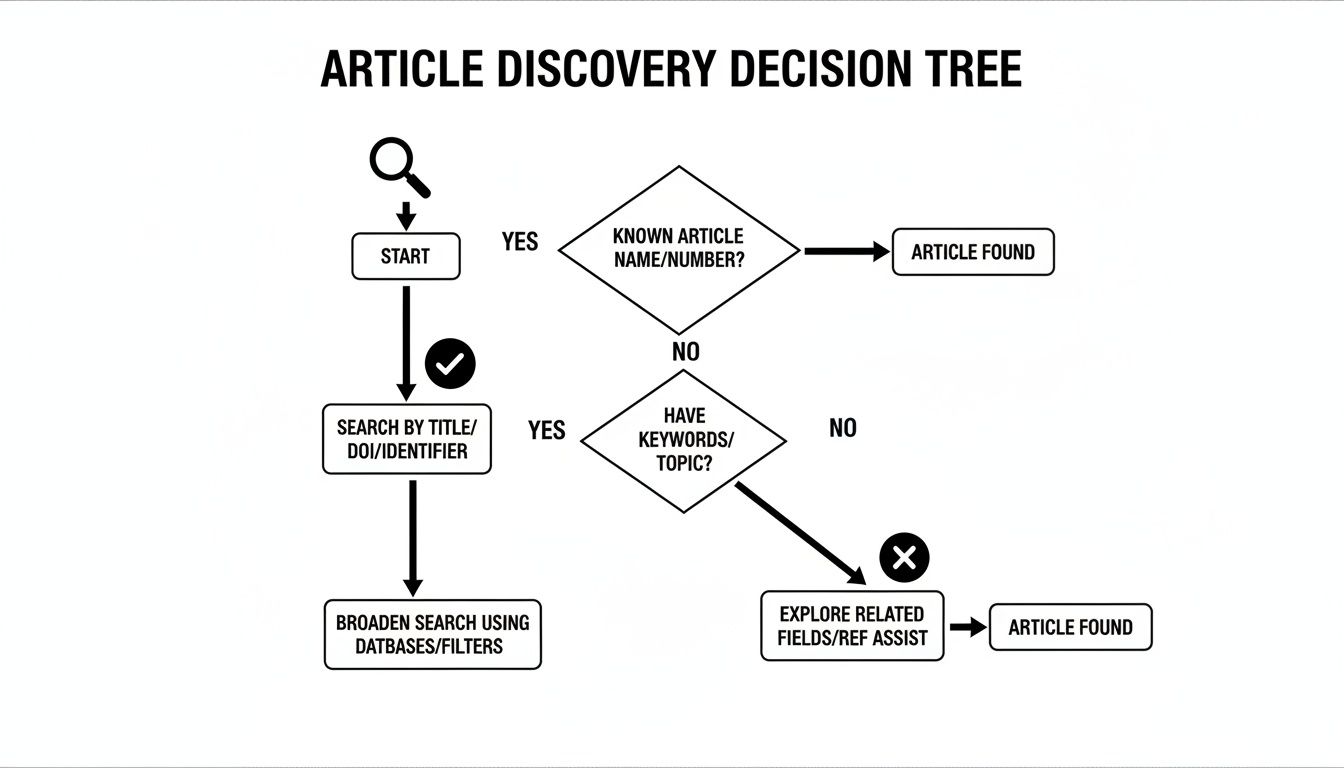
As you can see, whether you are starting with the company name or its registration number, getting to the documents is pretty straightforward.
Appointing and Removing Directors
How a company brings directors on board (and gets rid of them) says a lot about its governance and stability. Standard articles will lay out a clear, democratic process where shareholders have the power to vote on appointing or removing board members. This is what keeps the leadership accountable to the company's owners.
Be wary of articles that make it incredibly difficult to remove a director or that give certain individuals a permanent seat on the board. Clauses like that can entrench control, making the company less responsive to its members and creating a risk if the leadership is not acting in everyone's best interests. A stable and transparent process is a good sign of a professionally run organisation.
Shareholder Rights and Decision-Making
Finally, have a look at the clauses that deal with shareholder rights and how decisions are made. The articles will state what percentage of votes is needed to pass different types of resolutions. As a rule of thumb, an ordinary resolution needs a simple majority (over 50%), whereas a special resolution for big changes (like amending the articles themselves) needs a 75% majority.
Keep an eye out for anything that waters down the power of ordinary shareholders. For instance, some articles might give certain shares, often those held by the founders, enhanced voting rights, meaning their votes count for more than anyone else's. This can make it impossible for other shareholders to have any real say in key decisions. A fair structure ensures every shareholder has a voice that is appropriate for their stake in the business.
By carefully checking these four key areas in the articles of association from Companies House, you can build a much clearer picture of a company’s integrity. It helps you spot potential red flags early and make an informed choice about whether an umbrella company is a safe and compliant partner for your contracting career.
Model Articles Versus Bespoke Articles
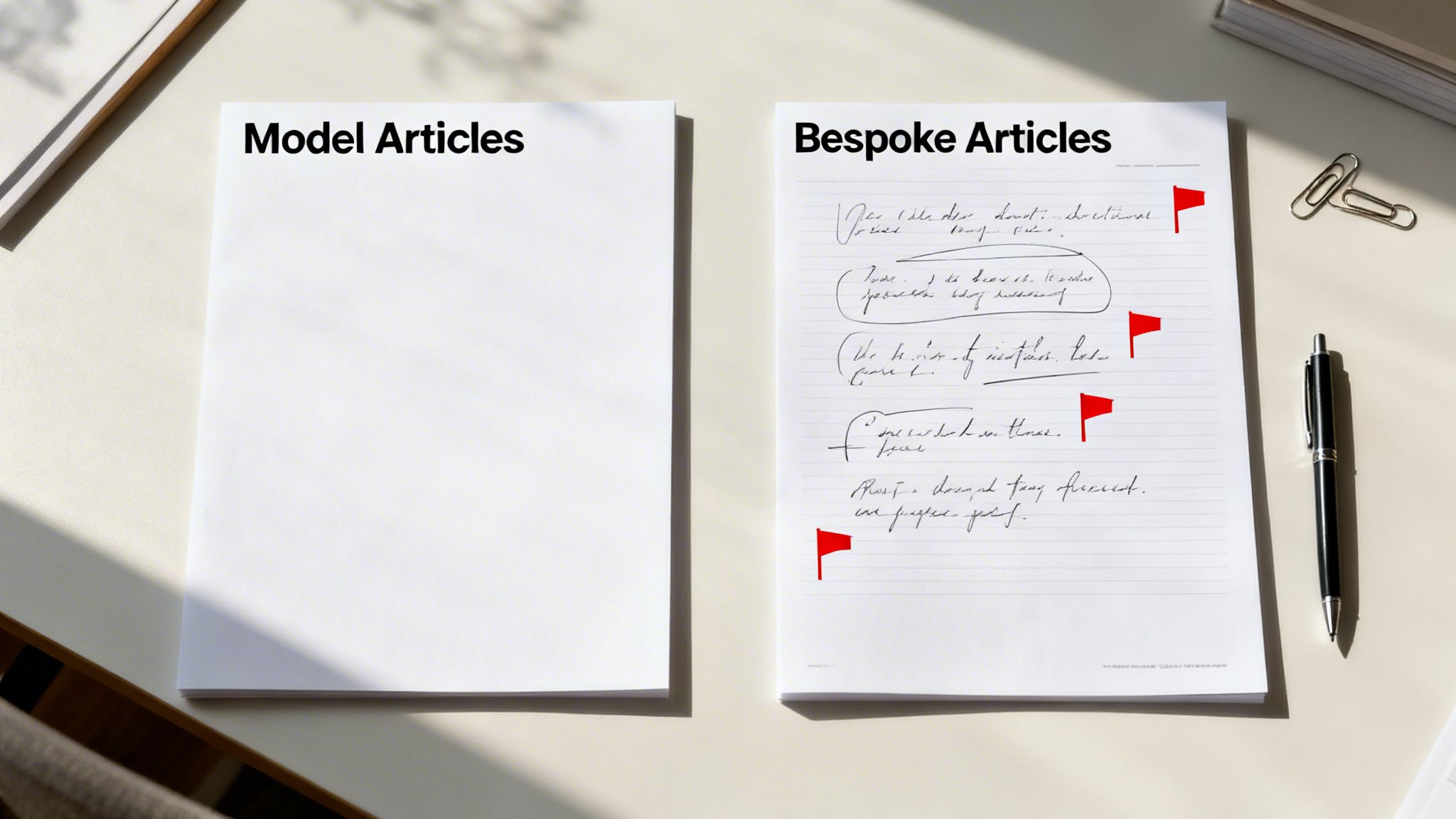
When you look up a company’s articles of association at Companies House, you will find they come in one of two flavours: model or bespoke. Understanding the difference is your first big clue about how the business is run, and a crucial part of your due diligence as a contractor.
Not all articles are the same. The choice between a standard template and a custom-written rulebook tells you a lot about the company's structure and motives. Let’s break down what to look for.
The Simplicity of Model Articles
Most UK limited companies, particularly smaller ones, get off the ground using model articles. These are the standard, off-the-shelf rules issued by the government under the Companies Act 2006. Think of them as the “flat-pack” version of a company constitution; they are straightforward, universally understood, and cover all the essentials for running a compliant business.
For a contractor checking out an umbrella company, finding model articles is usually a good sign. It points to a no-frills, standard corporate setup without complex or unusual rules buried in the fine print. This kind of simplicity often goes hand-in-hand with a transparent, easy-to-understand operation.
When a company uses model articles, it's a clear signal that it operates on a standard, legally recognised framework. This lack of customisation often means less risk and fewer nasty surprises for you.
Because they are a known quantity, model articles make your review process much quicker. You can be confident the rules on director powers, shareholder rights, and decision-making are all by the book. There are no strange clauses designed to trip you up.
When to Scrutinise Bespoke Articles
Some companies, however, opt for bespoke articles. These are custom-drafted rules, usually put together by solicitors to meet very specific business needs. While there are plenty of legitimate reasons for this, they always call for a much closer inspection from contractors.
A legitimate business might use bespoke articles to:
- Manage complex investments or different funding rounds.
- Create different share classes for a family-run business or joint venture.
- Set up unique voting rights to protect the founders' interests.
- Incorporate rules required for a specific regulated industry.
The key is that there should be a clear, logical reason for not using the standard model. However, bespoke articles can also be a tool to create intentionally confusing or non-compliant structures. In the umbrella world, they might be used to facilitate tax avoidance schemes. For instance, overly complex share classes can sometimes be a red flag for arrangements that try to disguise salary as dividends, a practice HMRC actively clamps down on. Our guide on how to pay yourself dividends correctly explains how this should work for a compliant PSC.
If you come across bespoke articles when vetting an umbrella company, do not panic, but do be cautious. Read the clauses on share rights and director powers very carefully. If the rules seem convoluted or restrict normal shareholder rights without a clear commercial justification, take it as a serious warning sign that the company may not be as straightforward as it should be.
How a Company Changes Its Rules and Why It Matters
A company’s rulebook is not a document that is carved in stone. But if a company wants to change its own rules, it cannot just do so on a whim. The process is formal, public, and tightly regulated to make sure a business cannot secretly rip up its own operating manual.
This is a crucial protection for anyone dealing with the company, especially contractors. When a business decides to alter its articles of association, it is not just a minor tweak; it is a formal amendment to its core constitution. In fact, it's useful to understand the difference between an addendum and an amendment in contracts to appreciate the weight of this change.
The Special Resolution Process
Changing the articles requires what is known as a special resolution. This is not a simple show of hands.
A special resolution needs the green light from at least 75% of the shareholders entitled to vote. That high bar is there for a reason, it stops a small group from bulldozing through changes that could harm other stakeholders.
Once the vote is in, the company cannot just quietly start using the new rules. It is legally required to tell the world by filing the updated articles with Companies House.
The steps are crystal clear:
- The company must get 75% shareholder approval via a special resolution.
- A copy of the amended articles has to be sent to Companies House within 15 days of the vote.
- Critically, the change only takes legal effect once Companies House has registered it.
The whole process is public. Every single amendment to a company's articles is logged in its filing history on the Companies House website. This transparency is your best friend when you are doing your homework on a potential partner.
This public record is an invaluable part of your due diligence. If you see frequent or very recent changes to a company's articles, it could be a sign of instability, a major restructure, or even a change of ownership. It is not automatically a red flag, but it is certainly a prompt to dig a little deeper and ask why the rules were rewritten.
Filing Fees and Modernisation at Companies House
It also costs money to file these changes. Companies House has been going through a major modernisation programme, partly to fund its new powers under the Economic Crime and Corporate Transparency Act 2023.
As of 1 May 2024, many fees went up. For example, the cost of digital incorporation jumped from £12 to £50. This extra revenue helps pay for new systems like mandatory identity verification and funds investigations into corporate fraud, all aimed at creating a more transparent UK business register.
For contractors, the bottom line is that the process for changing a company's articles is solid, public, and properly regulated. A company simply cannot hide these kinds of structural changes, which gives you an extra layer of security. By checking the filing history, you can see if an umbrella has a stable, consistent governance framework or if it is always chopping and changing its rules.
This insight is also handy if you are weighing up your own business structure. If you are thinking about making a change, you can explore our guide on how to switch from an umbrella company to a limited company.
Your Quick Checklist for Reviewing Articles
Alright, let's pull all this together into a simple checklist. Think of this as your pre-flight check before you commit to working with an umbrella company or, for that matter, any other business.
Running through these steps will help you quickly get a feel for a company's transparency and structure. It is about turning the theory we have discussed into a fast, practical workflow to protect yourself.
A Contractor's Due Diligence Workflow
Follow these steps to give any company's articles a quick but effective once-over. This will help you spot if a company is set up in a standard, straightforward way or if you need to be more cautious.
Step 1: Find the Company. Head to the official Companies House website and search for the business using its full name or company registration number.
Step 2: Download the Articles. Click into the ‘Filing history’ tab. You are looking for the most recent version of the Articles of Association. This will either be under the initial ‘Incorporation’ filing or a later filing labelled ‘Resolution’.
Step 3: Identify the Type. Skim the document to see if they are using the standard model articles or if they are custom bespoke articles. Seeing model articles is generally a good sign of a simple, no-fuss setup.
Step 4: Scrutinise Bespoke Rules. If the articles are bespoke, you need to pay closer attention. They are often used for perfectly legitimate reasons, but they can also be a place to hide complex or risky arrangements.
Step 5: Look for Unusual Share Rights. Go straight to the clauses on share capital. Are there multiple classes of shares with odd or unequal rights to dividends? This is a major red flag and can sometimes point towards a non-compliant payment scheme.
Step 6: Review Director Powers. Check what the articles say about the powers given to directors. If the authority seems unusually broad or completely unchecked, it could suggest poor governance.
Step 7: Check the Filing History. Finally, have a quick look through the company's filing history for any recent or frequent changes to its articles. Constant chopping and changing can be a sign of instability or a recent shake-up that you need to be aware of.
Taking these steps is the foundation of your own due diligence. It’s how you can get a basic, but solid, assurance that a potential umbrella partner is operating above board.
By following this checklist, you can methodically size up the core structure of any business. It gives you the know-how to spot potential problems early, making sure you only partner with companies that are clear and compliant. For any modern contractor, this is a vital skill.
Frequently Asked Questions
Let’s tackle a few common questions contractors have about Articles of Association. Getting these details right is key to your due diligence, so here are some quick answers to clear up any confusion.
Are Articles of Association the Same as a Memorandum?
No, they are not, although it is easy to see why people mix them up. Since the Companies Act 2006, the Memorandum of Association is now just a simple, historical record confirming that the first shareholders intended to form a company.
The Articles of Association are the document you really need to care about. This is the active rulebook that governs how the company is run day-to-day, making it essential reading when you are checking out a potential partner.
What Happens If a Company Ignores Its Own Articles?
If a company's directors make a decision that goes against its own articles, that action can be ruled invalid. Shareholders have every right to challenge these decisions in court and hold the directors accountable for failing to follow the agreed procedures.
This is precisely why having clear, standard articles is a sign of a trustworthy, well-run company. It signals a commitment to operating within a transparent framework that protects everyone involved.
Think about it: a company willing to ignore its own constitution is not a reliable business partner. It points to a culture where rules are flexible, and that is a massive risk for any contractor.
Can an Umbrella Company Operate Without Articles?
Absolutely not. Every single limited company in the UK is legally required to have Articles of Association from the moment it is registered with Companies House. There are no exceptions.
- It is a legal requirement: A company simply cannot be incorporated in the UK without them.
- It is a major red flag: If any organisation claims not to have articles, or refuses to show you where to find them on the public register, walk away. End the conversation right there.
- Transparency is everything: A compliant and professional umbrella company will be completely open about its governing documents.
This is a fundamental part of UK company law. Any hesitation to provide this basic information should be treated as a serious warning sign of a non-compliant or even fraudulent operation.
Navigating the world of contracting requires confidence that your partners are fully compliant. At UmbrellaCompany.com, we help you compare trusted, accredited umbrella companies so you can work with complete peace of mind. Find your compliant umbrella company today.


